Ambon Diving Guide: Muck Diving Critters of the Spice Islands
Ambon diving means muck diving. On the black rubble slopes of Ambon Bay, divers find the psychedelic frogfish, ghost pipefish and other strange critters that made this Maluku island one of Indonesia's top macro photography destinations. Here's what to know before you go.
Indonesia
Guide
Asia

Photo by
Mitchel Wijt
Ambon diving means muck diving. On the island of Ambon in Indonesia's Maluku province, the Spice Islands, a dark rubble slope inside a quiet bay has become one of the most photographed dive sites on Earth. In 2008, divers working that rubble at Laha found a fish new to science, and Ambon's reputation as a macro photography destination was set. The island sits between Sulawesi and Papua, off most travelers' routes, but a sheltered bay, a handful of dedicated dive centers and a steady supply of strange critters keep photographers coming back. Divers who make the trip usually build a whole itinerary around slow, careful looking rather than covering ground.
What Makes Ambon Diving Different
Most Indonesian dive trips chase clear water and big animals: manta rays, sharks, walls stacked with fish. Ambon diving does the opposite. The signature sites sit inside Ambon Bay, on slopes of dark volcanic rubble mixed with old debris, and the appeal is what hides in that rubble rather than what swims past in open water. Divers call this style muck diving, and Ambon is one of the few places in the world built around it, alongside Lembeh Strait in North Sulawesi. Ambon has the site where a new species was actually described. Histiophryne psychedelica, better known as the psychedelic frogfish, was found and named from specimens collected at Laha in 2008. It still turns up there today, and it remains one of the main reasons photographers plan a trip around this one bay.
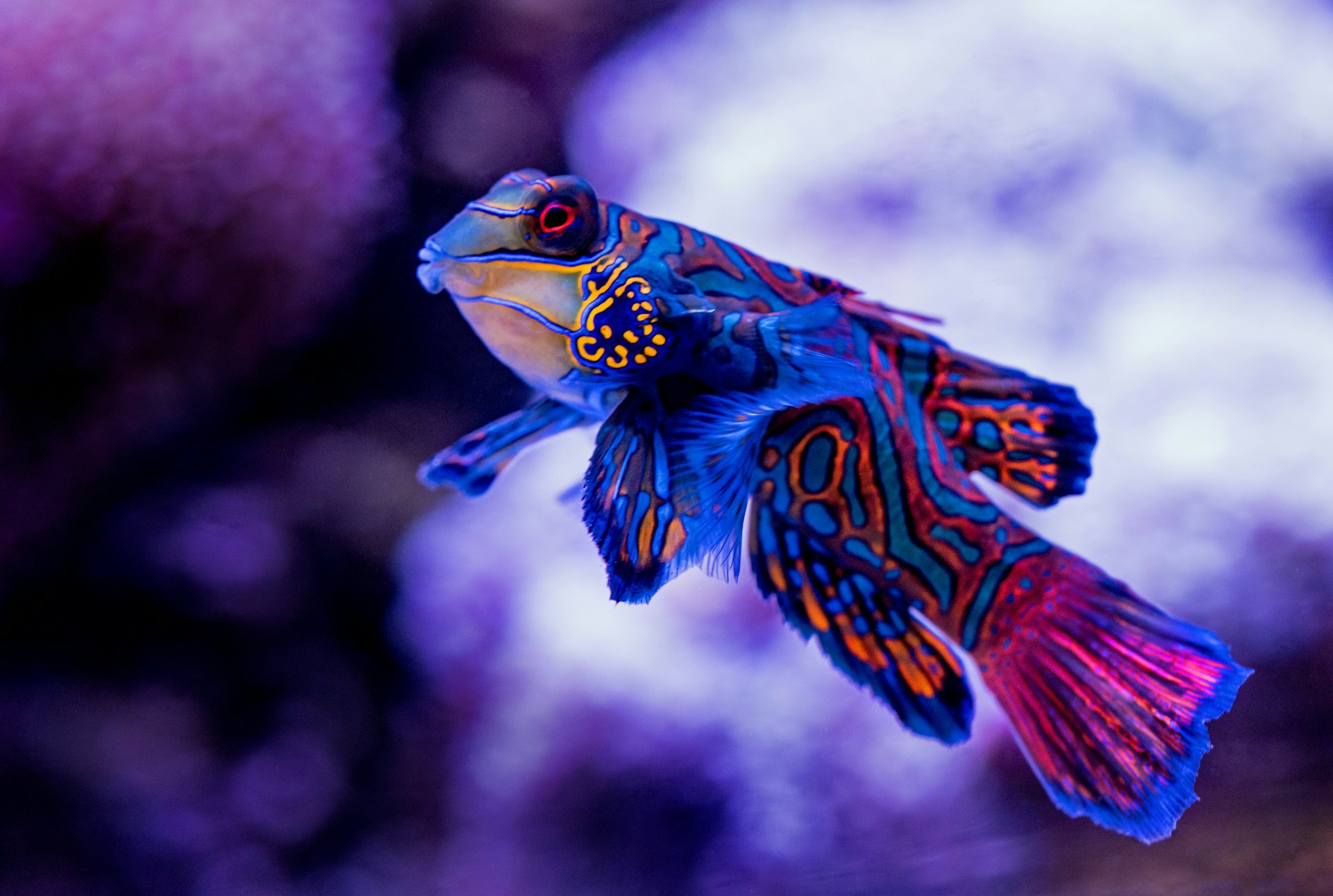
Photo by David Clode
Best Ambon Dive Sites
Ambon's dive sites split into two very different styles: the muck slopes inside the bay, and the walls and caves on the open coast outside it.
Laha (Twilight Zone): A black rubble slope by the jetty at Laha village, split into Laha 1, 2 and 3. Average depth is about 12 metres, dropping to roughly 30. Visibility runs 10 to 30 metres. This is where the psychedelic frogfish was found, and it also holds rhinopias, ghost pipefish, mandarinfish, harlequin shrimp, flamboyant cuttlefish and unusual octopus.
Pintu Kota: Meaning "gate of the city," this southwest coast site has a sea fan covered archway at 15 to 17 metres. The slope beside it drops steeply, and the dive finishes shallow at about 7 metres. It is Ambon's main wide angle dive, a contrast to the muck sites inside the bay.
Hukurila Cave: A chimney dive on the south coast, about 15 kilometres from Ambon city. Two rock arches lead to a swim through at around 10 metres, and the chimney splits into three exits near 20 metres. The walls carry red, pink and orange gorgonian sea fans, sponges and whip corals.
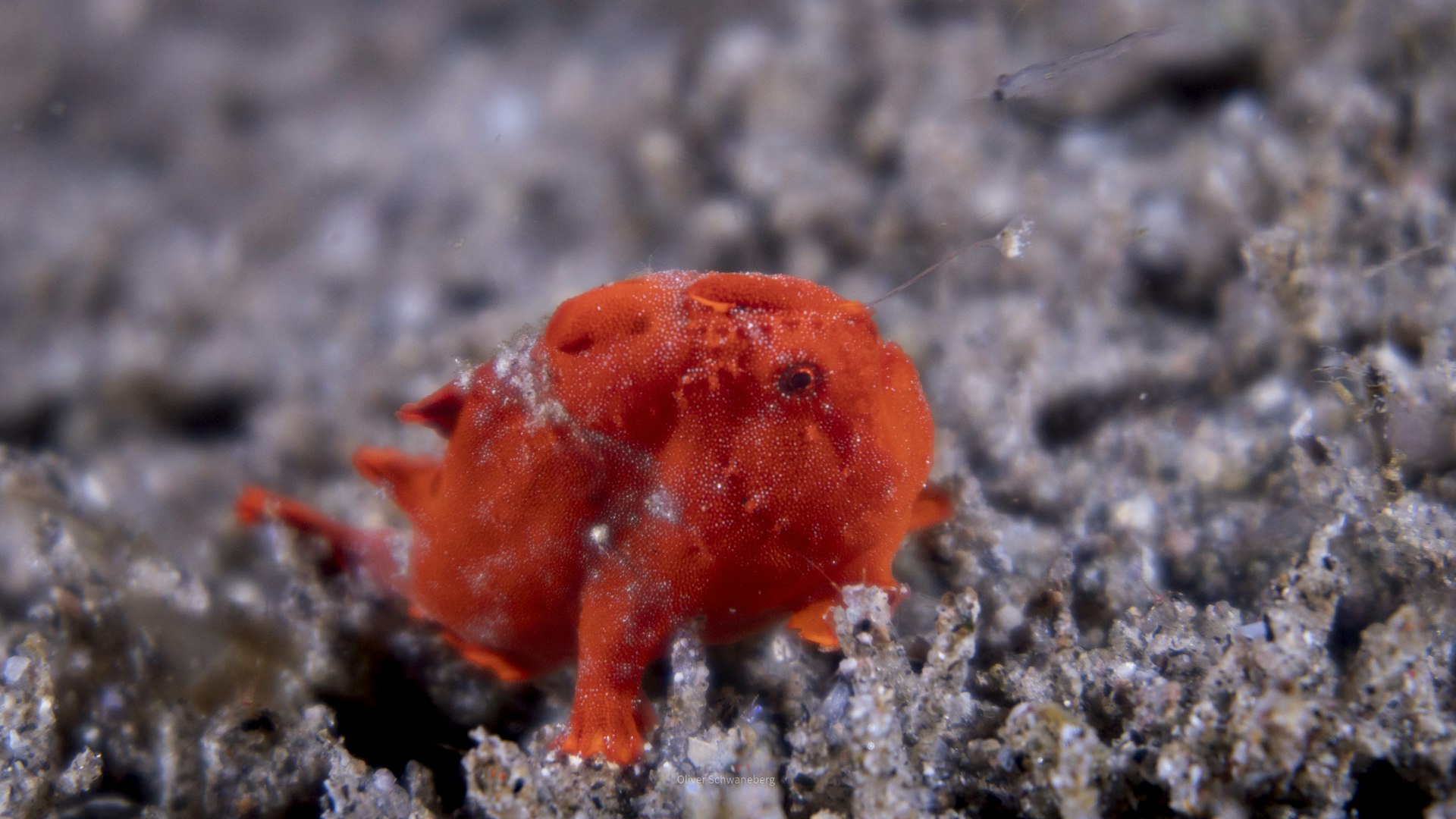
Photo by Oliver Schwaneberg
Marine Life You Can Find in Ambon
Ambon's rubble slopes and reef walls hold some of the most sought after critters in Indonesia diving. At Laha, guides regularly find rhinopias scorpionfish, several kinds of frogfish, ghost pipefish, mandarinfish, harlequin shrimp, flamboyant cuttlefish, mimic and other unusual octopus, moray eels and stonefish. Nudibranchs turn up everywhere on the rubble, in enough colors and shapes that many divers give up trying to name every one on the spot and just shoot first. At Hukurila Cave, the gorgonian sea fans on the chimney walls hide pygmy seahorses, and dogtooth tuna, jacks, trevally, sweetlips, snapper and barracuda shelter around the structure, with blue spotted stingrays resting on the sand nearby. Pintu Kota's archway draws reef fish and the chance of something larger passing in the blue water beside the wall. Between the three sites, a single day of Ambon diving can move from wide angle work on a sea fan covered arch to hours spent hovering a few centimetres from a single rhinopias.
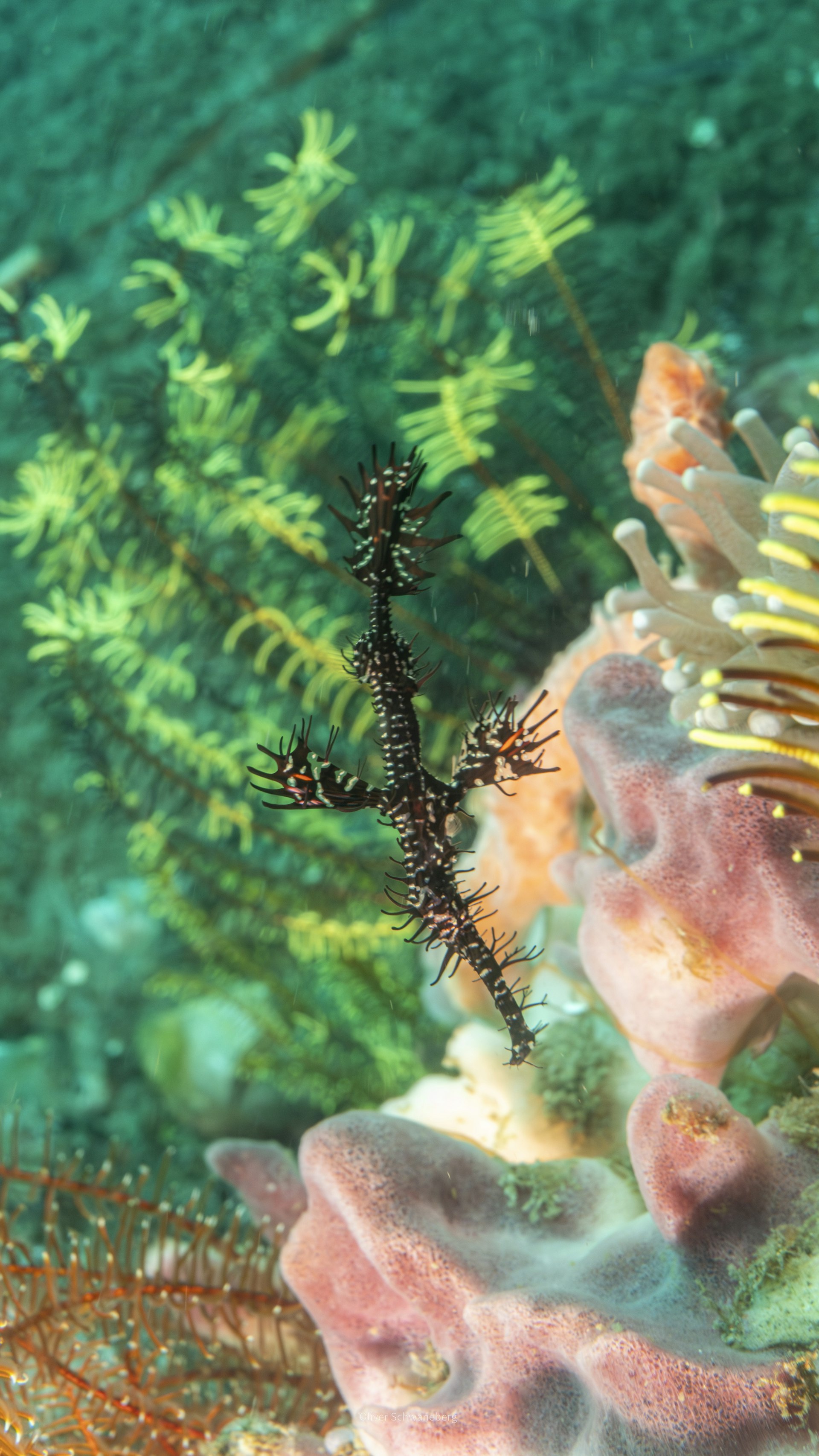
Photo by Oliver Schwaneberg
Best Time to Dive Ambon
Ambon is dived across most of the year, and the muck sites inside the bay do not depend on one short weather window. Dive centers on the island run their main season from about September to May, and Ambon Dive Resort, for example, takes guests from early September to late May. Water temperature stays close to 26 to 30 degrees Celsius year round. The south coast sites, including Hukurila Cave, are sometimes given a narrower best season of May to September, so it is worth checking conditions with the center you book if a wall or cave dive is the priority.
Getting to Ambon
Flights connect to Pattimura Airport (AMQ), Ambon's main airport, usually via Jakarta or Makassar. Several dive centers, including Ambon Blue Rose Divers and Ambon Dive Explore, are based at Laha, close to the airport, so divers can be in the water on the muck slopes soon after landing. Ambon Dive Explore keeps its shop open from 8am to 5pm and rents equipment alongside its SSI training courses, which helps divers arriving without full kit. Ambon Dive Resort sits further out at Seilale on the Nusaniwe peninsula, reached by boat from Ambon city, and takes guests on full board stays built around diving, with staff who speak English, Indonesian and French and a dedicated space for editing photos and video. From any of these bases, day boats reach Pintu Kota and Hukurila Cave on the south coast.
Ambon Diving FAQ
Is Ambon diving good for beginners?
The muck sites at Laha are shallow, sheltered and rated for beginners, though good buoyancy matters since the rubble bottom clouds easily if it is kicked. Pintu Kota and Hukurila Cave are also rated beginner, but currents can pick up at Pintu Kota and Hukurila is an overhead dive best done with a guide who knows its exits.
What is the psychedelic frogfish?
The psychedelic frogfish, Histiophryne psychedelica, is a species first found and described from specimens collected at Laha in 2008. It still lives on the same rubble slopes today and is one of the main reasons photographers plan a trip to Ambon.
When is the best time to dive Ambon?
Ambon is dived through most of the year, with dive centers running their main season from about September to May. Water temperature stays near 26 to 30 degrees Celsius. South coast sites like Hukurila Cave are sometimes given a narrower best season of May to September.
How do you get to Ambon?
Fly into Pattimura Airport (AMQ), usually connecting through Jakarta or Makassar. Dive centers based at Laha put divers close to the muck sites right after landing, while Ambon Dive Resort at Seilale is reached by a short boat ride from the city.
Where to Book Your Ambon Dive Trip
Ambon stays off the well worn Bali to Komodo route, so trip planning usually starts with picking a base at Laha or Seilale. Ambon Dive Explore, Ambon Dive Resort and Ambon Blue Rose Divers all run trips to Laha, Pintu Kota and Hukurila Cave from their bases on the island. Browse our dive center directory or check dive sites across Indonesia to plan the rest of your trip.


Where to book your Ambon dive trip?




Find certified PADI, SSI, and RAID schools across Asia. Your guide to the world’s most unforgettable dive spots.