Togian Islands Diving: Off-Grid Reefs in Central Sulawesi
The Togian Islands sit in the calm heart of the Gulf of Tomini in Central Sulawesi. Divers come for untouched reefs, the barracuda school at Una Una and a WWII bomber wreck. Getting there takes effort, and that effort keeps the islands blissfully quiet.
Indonesia
Guide
Asia

Photo by
Micah Young
Togian Islands diving is Indonesia at its most remote. The archipelago sits in the middle of the Gulf of Tomini, Central Sulawesi, far from any tourist trail. There are no crowds, no dive boat traffic and often no phone signal. What you get instead is quiet reefs, a resident barracuda school around a volcano and a WWII bomber resting on the sand.
This guide covers the best diving areas in the Togian Islands, the marine life, the famous B24 wreck, when to go and how to actually get there. It takes some effort to reach. That effort is exactly why the reefs stay this good.
Why dive the Togian Islands?
The Togian Islands are one of the few places on Earth with all three major reef types in one area: fringing reefs, barrier reefs and atolls. The islands sit inside Togean Islands National Park, a protected area established in 2004, in the sheltered Gulf of Tomini in Central Sulawesi.
That reef variety changes how a dive trip feels. One day you drift along a fringing reef right off your resort jetty. The next you cross open water to an atoll where the reef rises from deep blue. Water is warm all year, usually 28 to 30 degrees Celsius, and the gulf's sheltered position keeps the seas calm.

Photo by Joan Li
The best diving areas in the Togians
The best diving in the Togian Islands splits into four areas: the central islands around Kadidiri, the volcanic island of Una Una, the B24 bomber wreck near Togean Island and the atolls in the south near Bomba. Most resorts reach all of them, though Una Una often means a full day trip.
Kadidiri and the central islands
Kadidiri is the classic base for divers. It is a small island near Wakai, the main port, with a handful of simple dive resorts on the beach. House reefs start right off the jetties. Day boats reach walls, coral gardens and channels around Togean, Talatakoh and Malenge. Expect turtles, reef fish in dense clouds, nudibranchs and healthy hard coral.
Una Una: the barracuda volcano
Una Una is the trip everyone talks about at dinner. The island is an active volcano in the northern gulf, and its slopes continue underwater as black sand and coral ridges. The signature sight is a huge resident school of barracuda that forms a slow, swirling wall around divers. Schooling jacks and the occasional reef shark join in. The volcano, Mount Colo, last erupted in 1983, and the island still feels raw.
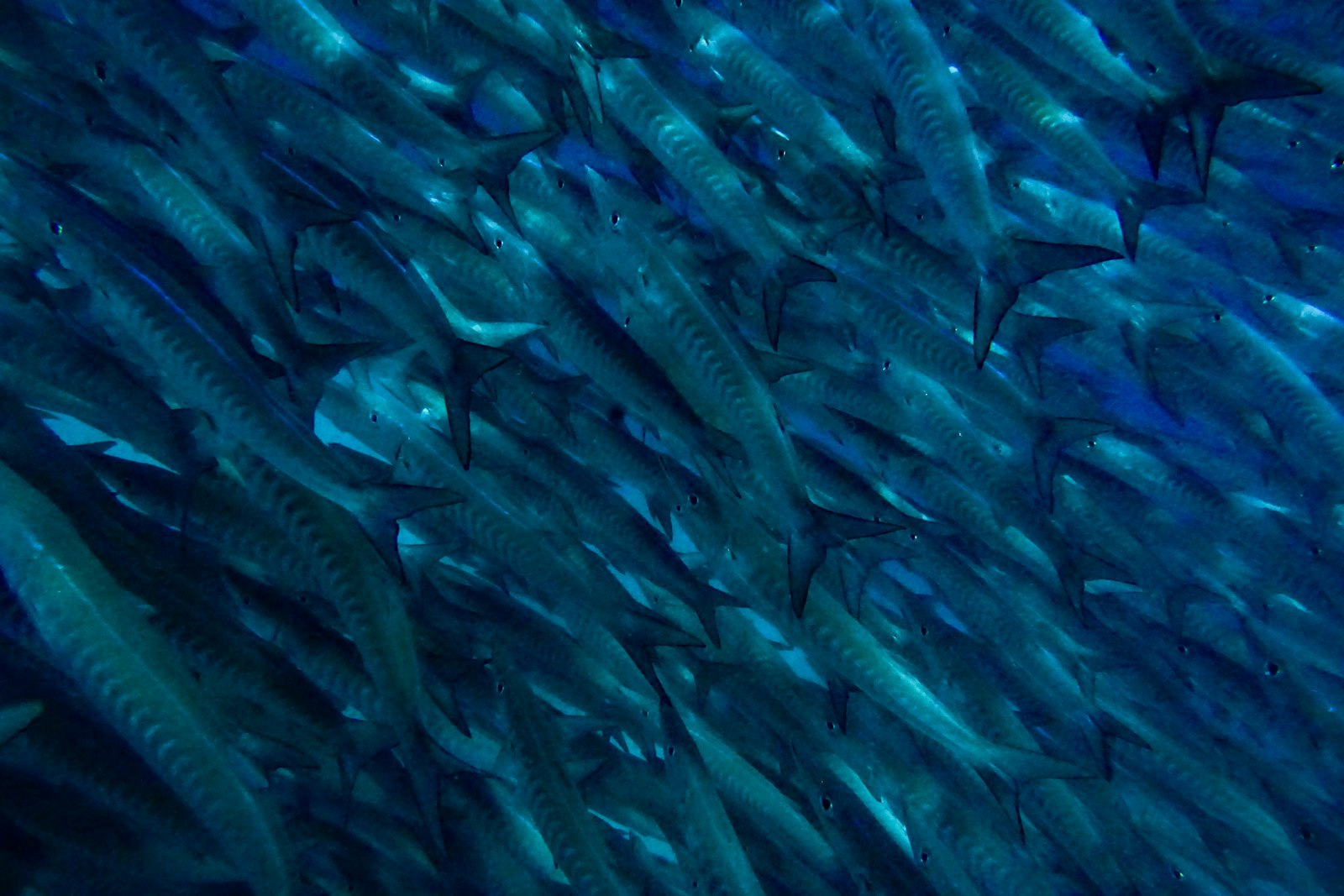
Photo by Anjeanette Guigue
The B24 bomber wreck
In 1945, an American B24 Liberator bomber ditched in the gulf after engine trouble. The crew survived. The aircraft now rests upright on a sandy bottom at around 20 metres, close to Togean Island. Wings, cockpit and tail are still recognisable, and coral slowly claims the frame. It is an easy, atmospheric wreck dive that suits Advanced Open Water divers and above.
Bomba and the southern atolls
Bomba, in the far south, sees the fewest visitors of all. Its draw is atoll diving: reefs that rise from open water with steep walls, big sponges and passing pelagics. Sites here feel wild, and on many days your group is the only one in the water.
More than diving: lakes and stilt villages
The Togian Islands offer more than reefs. A hidden saltwater lake in the islands holds thousands of stingless jellyfish, and you can snorkel among them as they pulse through the green water. Most resorts arrange trips by boat.
The islands are also home to Bajau communities, often called sea nomads. Papan is the best known village, built on stilts over the shallows and linked to Malenge by a long wooden footbridge. Visits are possible with local guides and give real context to life on the gulf.
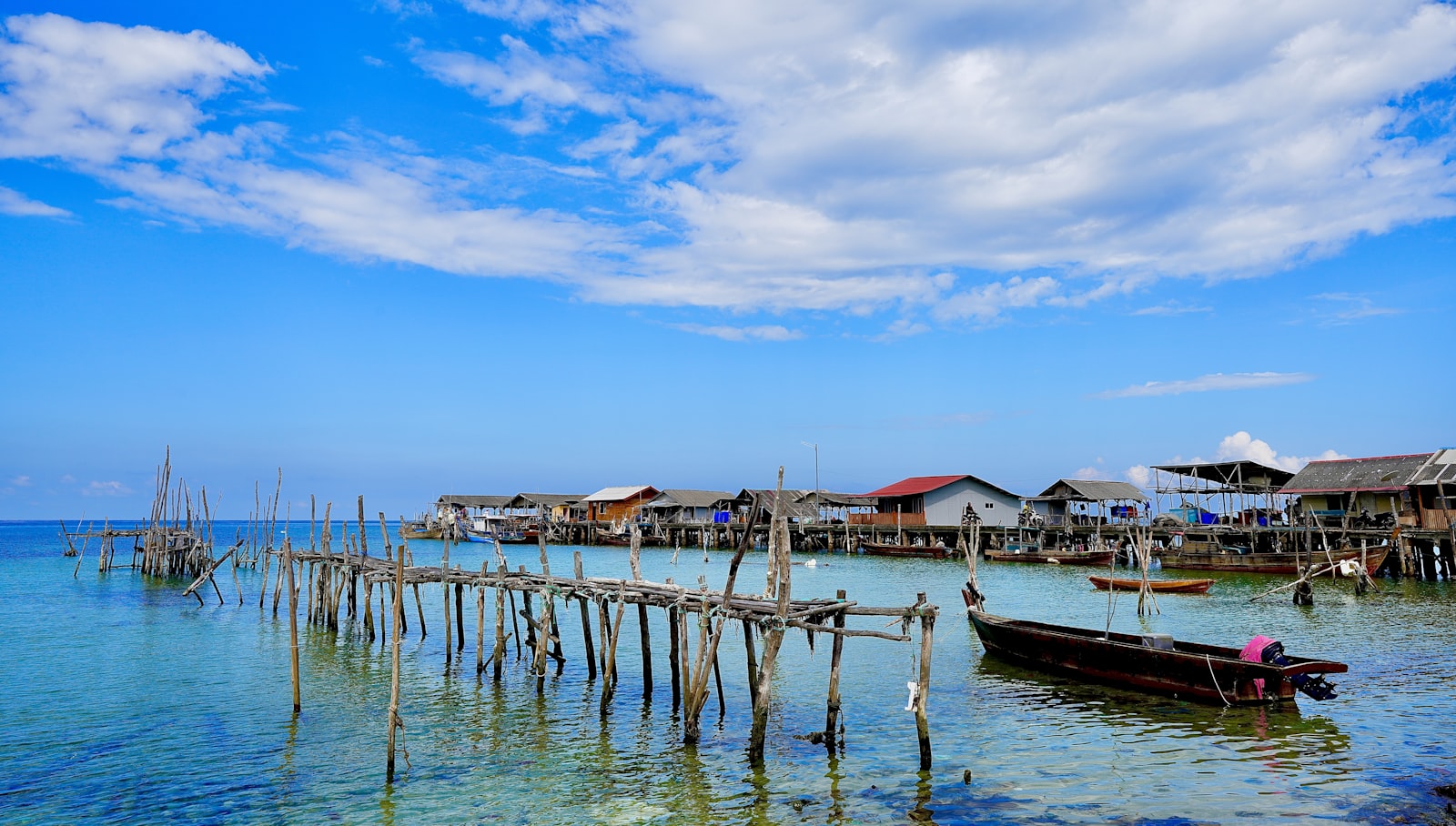
Photo by Mukiman Bong
When to go
The Togian Islands are a year-round dive destination. The Gulf of Tomini sits on the equator and is protected by Sulawesi's arms on three sides, so it rarely sees rough seas. Most operators consider the dry months, roughly March to November, the most reliable for visibility and easy boat rides.
Rain can fall in any month, usually in short bursts that pass quickly. Water stays warm all year, so a 3 mm wetsuit or even a rash guard is enough for most divers. For a wider view of seasons across the country, read our guide on the best time to dive Indonesia.
Getting to the Togian Islands
Reaching the Togian Islands takes a flight and a boat, sometimes two. The two common routes run through Ampana on the Central Sulawesi coast or Gorontalo in the north. From Ampana, public boats cross to Wakai and the islands. From Gorontalo, an overnight ferry crosses the gulf a few times per week.
Plan your logistics before you leave the mainland. Bring enough cash for your whole stay, since the islands have no reliable ATMs. Expect electricity from generators, often only in the evenings, and weak or absent phone signal. Many divers combine the Togians with Bunaken or Lembeh, covered in our North Sulawesi diving guide.
Frequently asked questions
Are the Togian Islands good for beginner divers?
Yes. The Gulf of Tomini is sheltered, seas are calm and many reefs start shallow right off the resort jetties. Warm 28 to 30 degree water and easy conditions suit new divers well. Deeper trips, like the B24 wreck at around 20 metres, suit Advanced Open Water divers.
What is special about diving Una Una?
Una Una is an active volcanic island whose underwater slopes hold a huge resident school of barracuda. Divers descend along black sand and coral ridges while the school forms a slow wall around them. Mount Colo last erupted in 1983, which explains the island's raw volcanic landscape.
When is the best time to dive the Togian Islands?
The Togians are diveable all year because the Gulf of Tomini is protected on three sides. Most operators favour the dry months from roughly March to November for the most reliable visibility and calm crossings. Rain in other months usually comes in short bursts.
How do you get to the Togian Islands?
Travel through Ampana or Gorontalo. From Ampana, public boats cross to Wakai and the surrounding islands. From Gorontalo, an overnight ferry crosses the gulf a few times per week. Bring cash for your whole stay, since the islands have no reliable ATMs.
Where to book your Togian Islands dive trip
The Togian Islands reward divers who plan ahead. Boats run on island time, resorts are small and spots fill up in the dry season. Sort your route, your cash and your bookings before you leave the mainland, and the islands will do the rest.
Browse our dive site directory to compare Indonesian regions, or start with a trusted operator. Well reviewed centers like Pure Dive Resort, Adventure Scuba Diving Bali and Blue Marlin Lombok Kuta can help you build Indonesia dive experience before you head somewhere as remote as the Togians. Find more options in our dive center directory.


Where to book your dive trip?


Find certified PADI, SSI, and RAID schools across Asia. Your guide to the world’s most unforgettable dive spots.