North Sulawesi Diving: Bunaken vs Bangka vs Lembeh
North Sulawesi packs three very different kinds of diving into one small region. Bunaken has coral walls, Bangka has soft coral pinnacles, and Lembeh has the world's best muck diving.
Here is how to pick the right base for your trip.
Indonesia
Guide
Asia
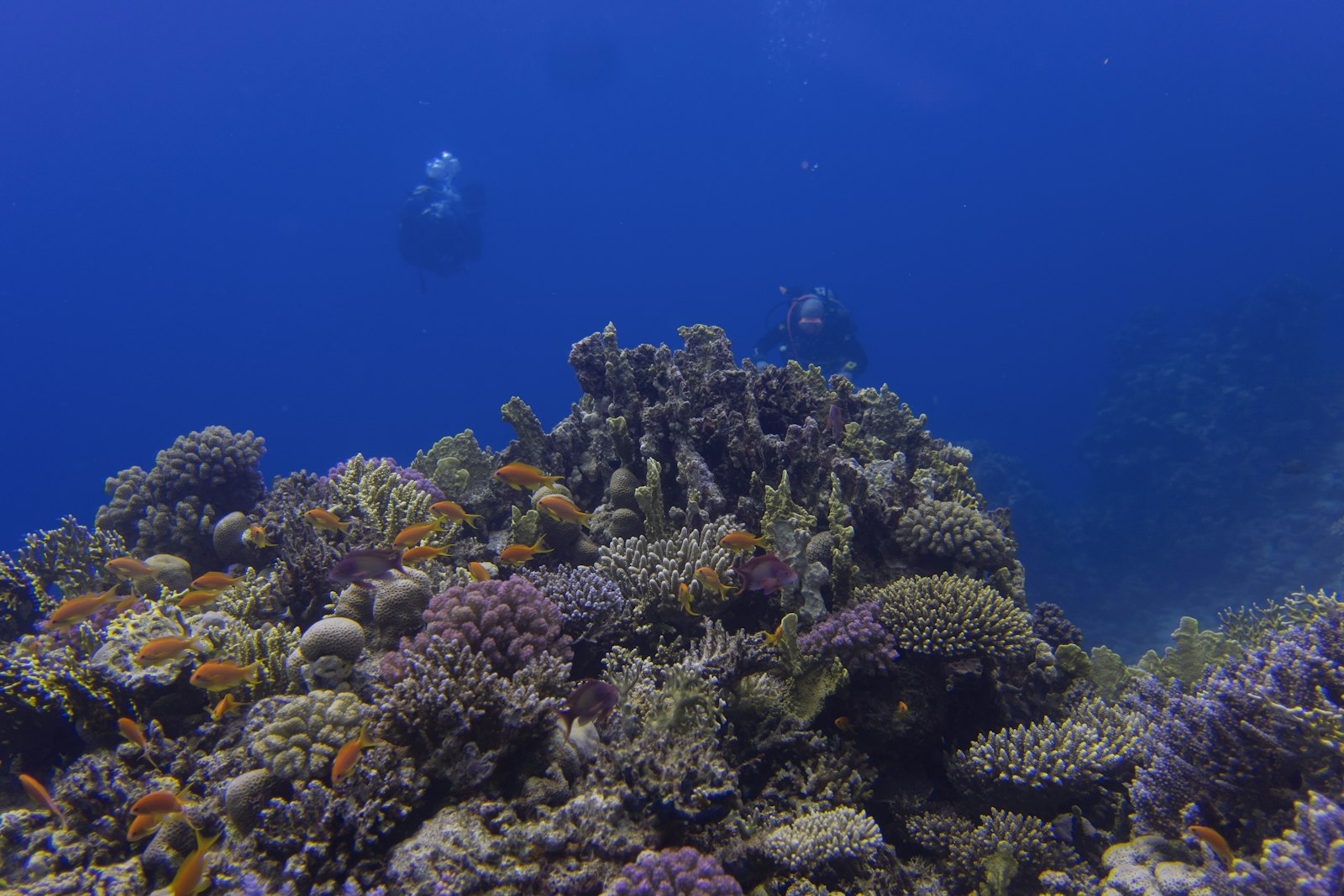
Photo by
Oliver Schwaneberg
North Sulawesi diving packs three completely different experiences into one small corner of Indonesia. You can drift along a coral wall in the morning and hunt for a thumb-sized octopus on black sand two days later. Both trips start from the same airport. The three main bases are Bunaken, Bangka and Lembeh. This guide explains what each one is good at, so you can pick the right base or split your trip between them.
What makes North Sulawesi diving different?
North Sulawesi sits at the northern tip of Sulawesi, inside the Coral Triangle. Three dive regions cluster around the city of Manado. Bunaken has steep coral walls and clear water. Bangka has soft coral pinnacles and current. Lembeh has black sand and rare critters. All three are within a few hours of each other.
That range is the real draw. Most dive destinations do one thing well. North Sulawesi lets you switch between wide-angle reef scenery and macro critter hunting without booking another flight. Plenty of divers split a two-week trip across two of the three areas.
Bunaken: wall diving in a marine park
Bunaken National Marine Park was established in 1991 and covers around 89,065 hectares. It takes in five islands: Bunaken, Manado Tua, Siladen, Montehage and Nain. The park is known for steep coral walls that fall away into deep blue water. Visibility is usually good, and turtles turn up on most dives.
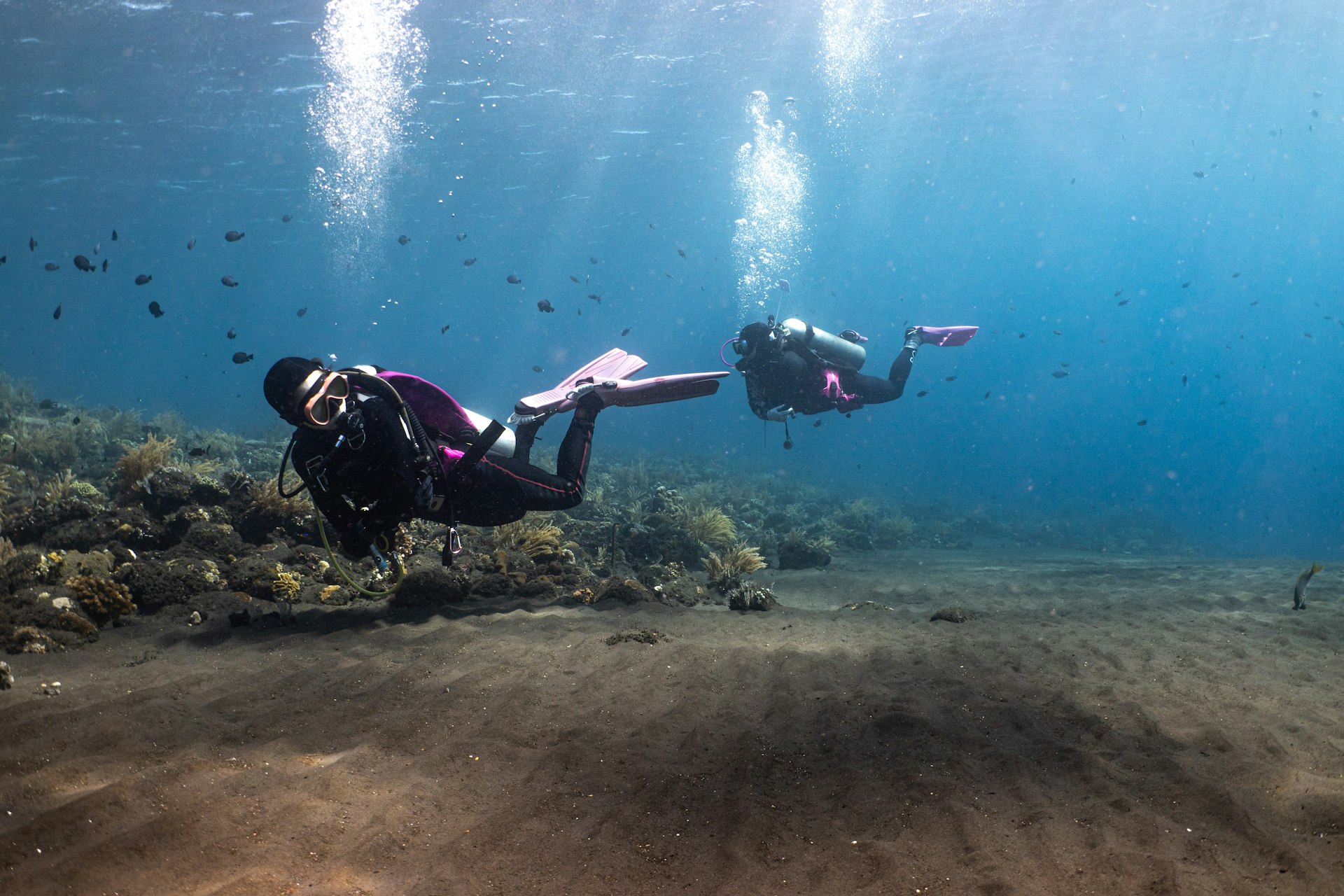
The diving here is classic wall diving. You drop in over a shallow reef flat, swim to the edge, and the reef drops beneath you. Sponges, sea fans and hard corals cover the wall face. Green and hawksbill turtles rest on ledges. Schools of fusiliers and surgeonfish move along the drop-off.
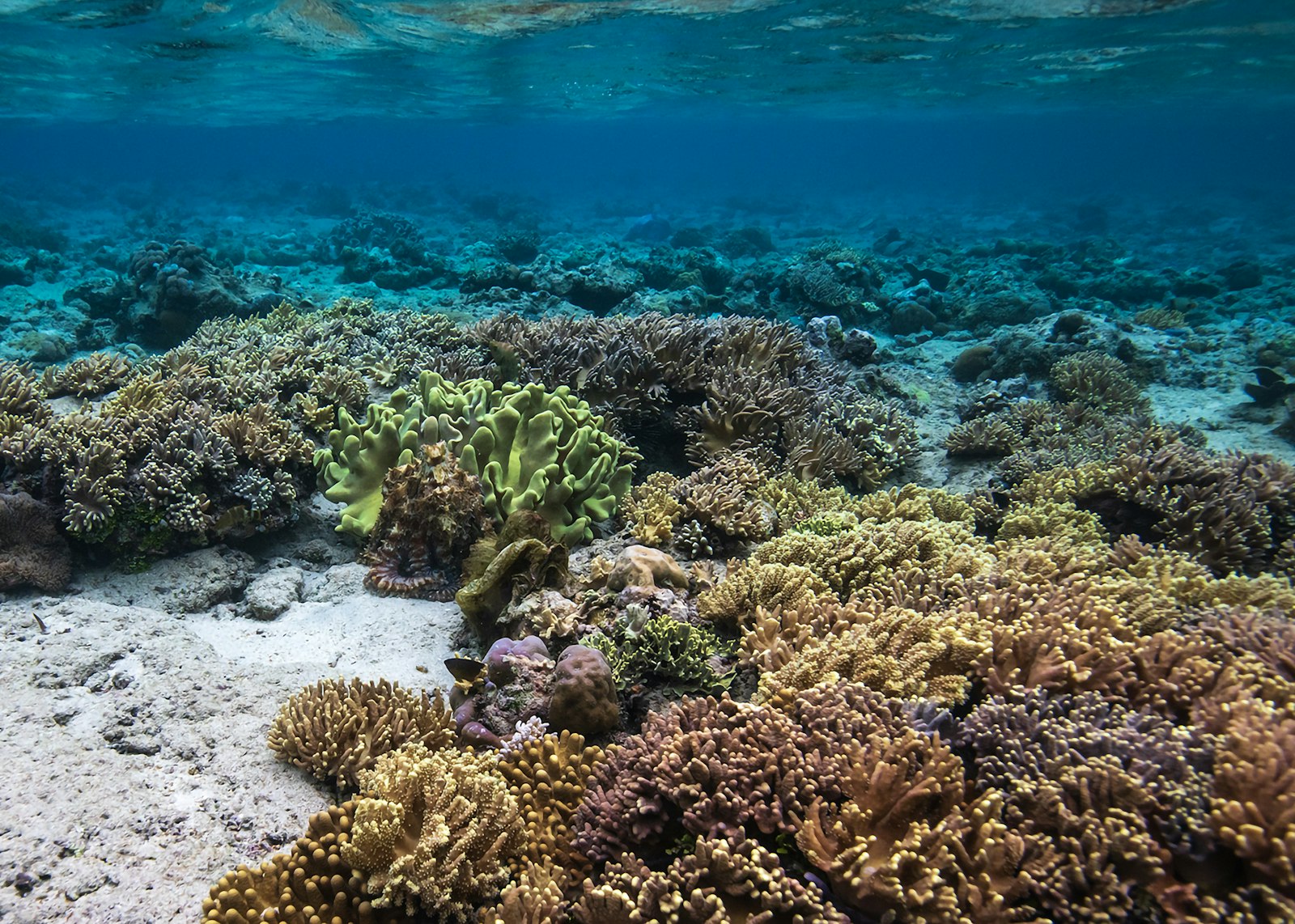
Photo by Ricky Beron
Bunaken suits divers who want scenery and easy conditions. Currents are usually mild to moderate. Most dives sit between 5 and 30 metres. It is a good fit for newer divers and for anyone shooting wide-angle photos. Our full Bunaken diving guide covers the individual sites in more detail.
Bangka: soft coral pinnacles and current
Bangka Island lies off the northeastern tip of North Sulawesi, reached through the village of Likupang. The diving is built around rocky pinnacles and reef slopes carpeted in soft coral. Sahaung, Batu Mandi and Batu Pendeta are the best known sites. Current is common here, and that is exactly what makes the colour work.
Soft coral polyps only open and feed when water is moving. On a gentle current day the whole pinnacle turns purple, orange and green. Sahaung itself is a group of boulders and pinnacles that barely break the surface. The bottom slopes down in shelves, and dives run from about 5 to 35 metres.
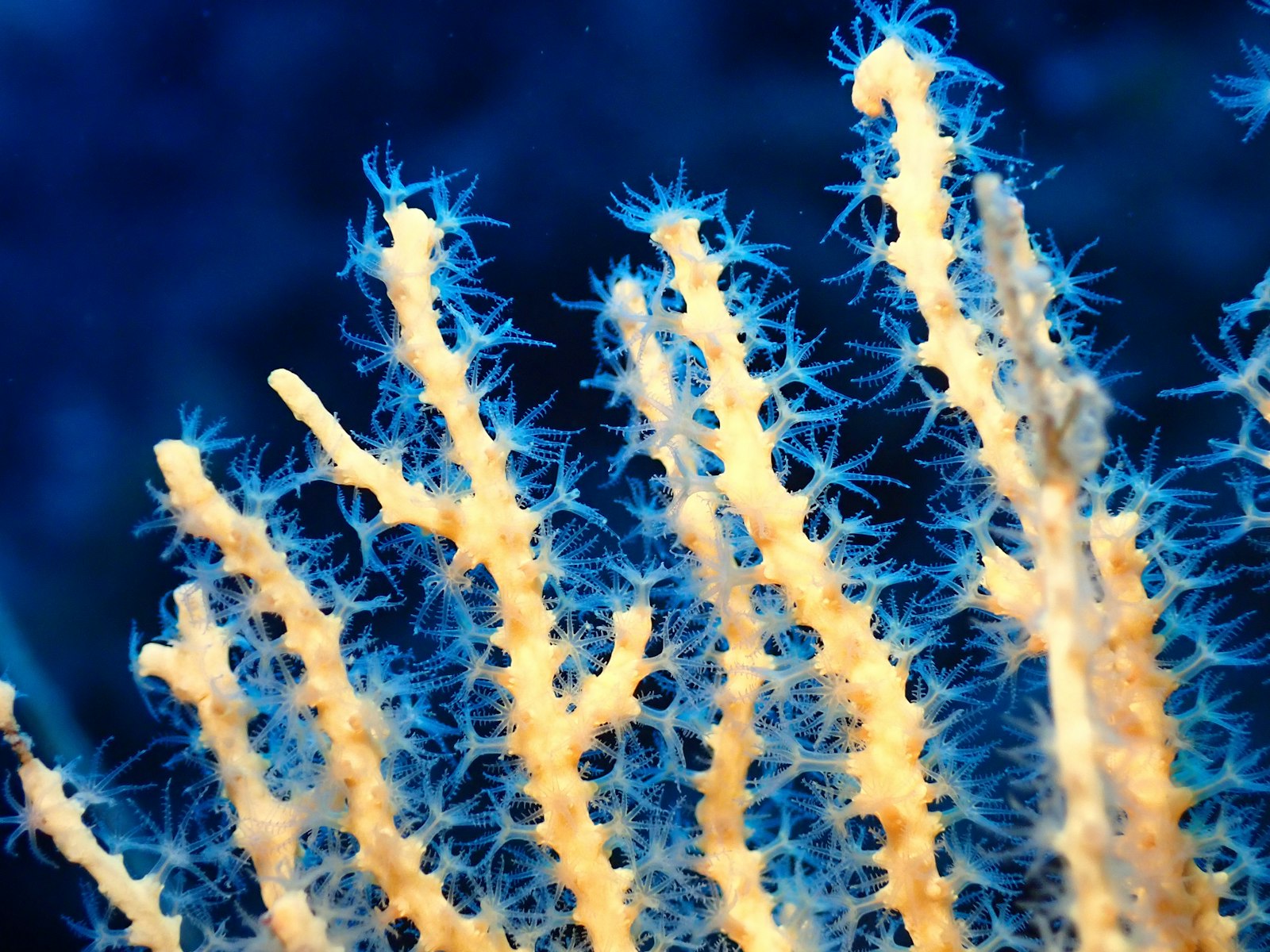
Photo by Marina J. Vergotti
Fish life is heavier than at Bunaken. Expect jacks, dogtooth tuna, barracuda, redtooth triggerfish and big schools of bluestripe snapper. Whitetip reef sharks often rest under the large table corals. Bangka also gets far fewer divers than the other two areas, so sites rarely feel busy.
Lembeh: the muck diving capital
The Lembeh Strait is a narrow channel between the port city of Bitung and Lembeh Island. The bottom is black volcanic sand, not coral. Divers come for the animals that live on it: hairy frogfish, mimic octopus, flamboyant cuttlefish, blue-ringed octopus and dozens of nudibranch species.
Muck diving looks strange the first time. You swim slowly over open sand and rubble while your guide points out things you would never spot alone. Dives are shallow, often between 5 and 20 metres. There is little current. Visibility runs lower than Bunaken, because the strait holds nutrient-rich water. That same water is what feeds all those animals.
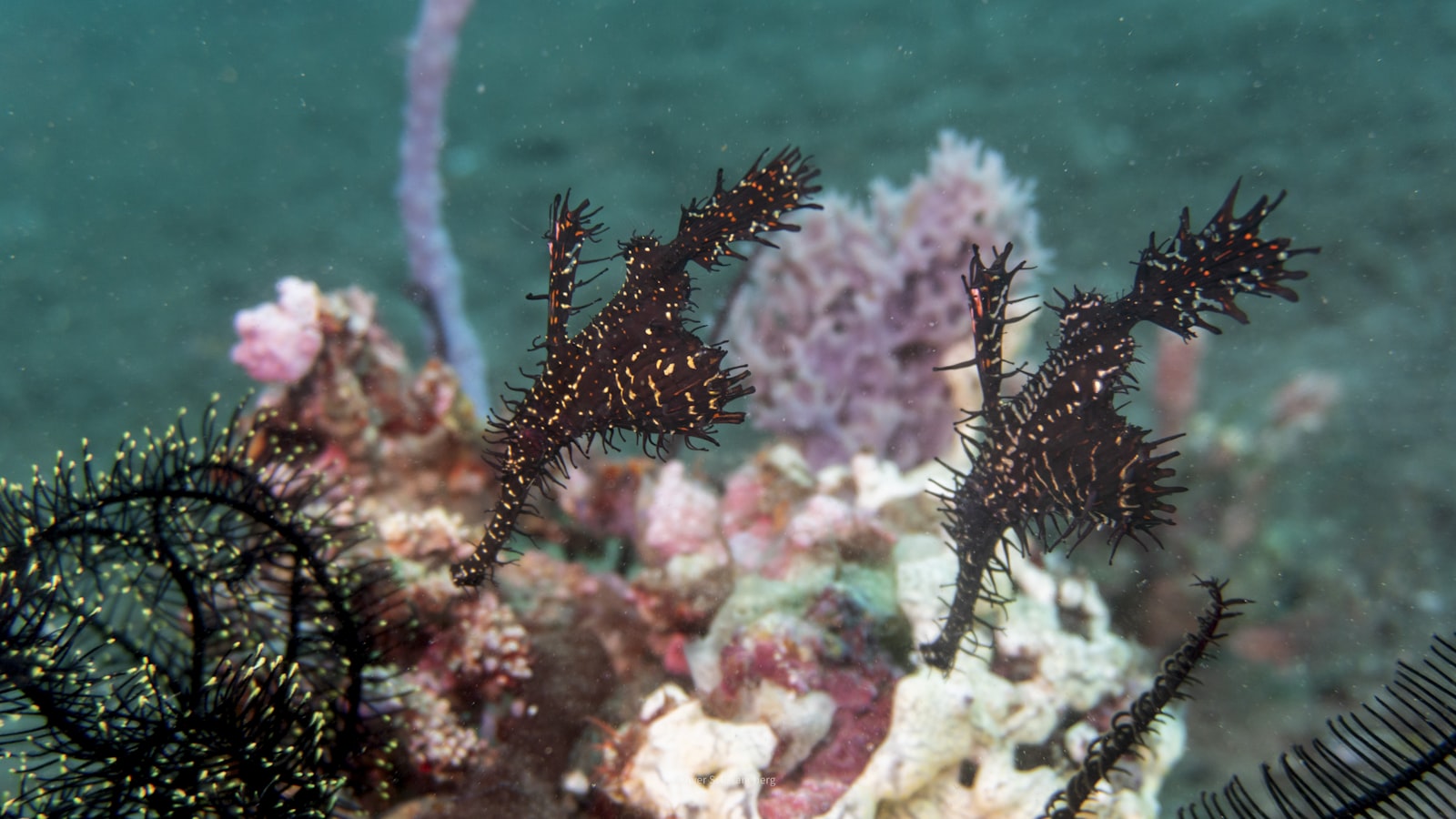
Photo by Oliver Schwaneberg
Lembeh rewards patience and punishes rushing. If you shoot macro, you may never want to leave. If you need reef scenery and blue water, one or two days is probably enough. Our Lembeh Strait diving guide goes deeper on the critters and the sites.
Bunaken vs Bangka vs Lembeh: which should you pick?
Pick Bunaken for coral walls, turtles and clear water. Pick Bangka for soft coral pinnacles, current and schooling fish. Pick Lembeh for rare critters on black sand and macro photography. If you only have one week, most divers pair Bunaken with Lembeh, because the two are opposites and sit close together.
New or nervous divers: Bunaken. Mild currents, shallow reef tops, plenty to look at.
Wide-angle photographers: Bunaken or Bangka.
Macro photographers: Lembeh, without question.
Divers who want fish action and current: Bangka.
Divers who want quiet sites: Bangka again.
Ten days or more: do all three.
When to go and how to get there
North Sulawesi is diveable all year. Water sits around 27 to 29 degrees Celsius. The wettest months are usually December through February, when rain and wind can make boat rides less pleasant. Conditions are generally calmest and clearest from around March to November.
Every trip starts at Sam Ratulangi International Airport in Manado. From there:
Bunaken: roughly 45 minutes by boat from Manado.
Bangka: around two hours by road to Likupang, then about 20 minutes by boat.
Lembeh: about 90 minutes to two hours by road to Bitung, then a 10 to 15 minute boat crossing.
Resorts in all three areas arrange these transfers for you. Moving between areas is straightforward, which is why combination trips are so common. For a wider view of Indonesian dive seasons, read our region-by-region season guide.
North Sulawesi diving questions
Is North Sulawesi good for beginners?
Yes. Bunaken has mild currents and shallow reef tops, which suits newly certified divers. Lembeh is also easy, because dives are shallow and there is little current. Bangka is the most demanding of the three, since current is common on the pinnacles.
Can I dive Bunaken and Lembeh on the same trip?
Yes, and many divers do. The two areas are roughly two to three hours apart by road and boat. Splitting a week between them gives you coral walls and muck diving in one trip. Resorts in both areas can arrange the transfer.
Which area has the best visibility?
Bunaken. Its walls sit in clear open water, so visibility is usually the best of the three. Lembeh has the lowest visibility of the three, because the strait holds nutrient-rich water.
What is muck diving?
Muck diving means diving over sand, silt or rubble instead of coral reef. The black volcanic sand of the Lembeh Strait is the classic example. You move slowly and look for small, well camouflaged animals such as frogfish, octopus and nudibranchs.
How many days should I spend in North Sulawesi?
Plan at least seven diving days if you want two areas, and ten or more for all three. Bunaken and Bangka each work well over three to four days. Lembeh can hold macro divers for a week on its own.
Where to book your North Sulawesi dive trip
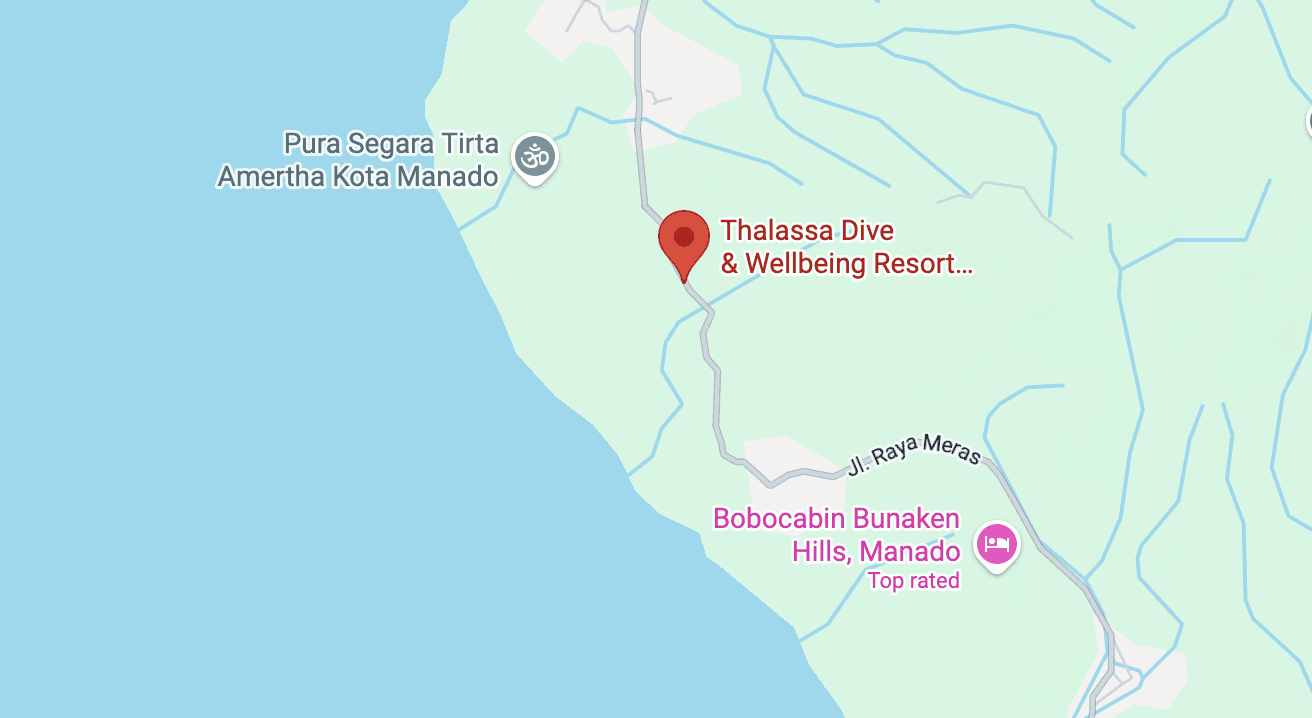
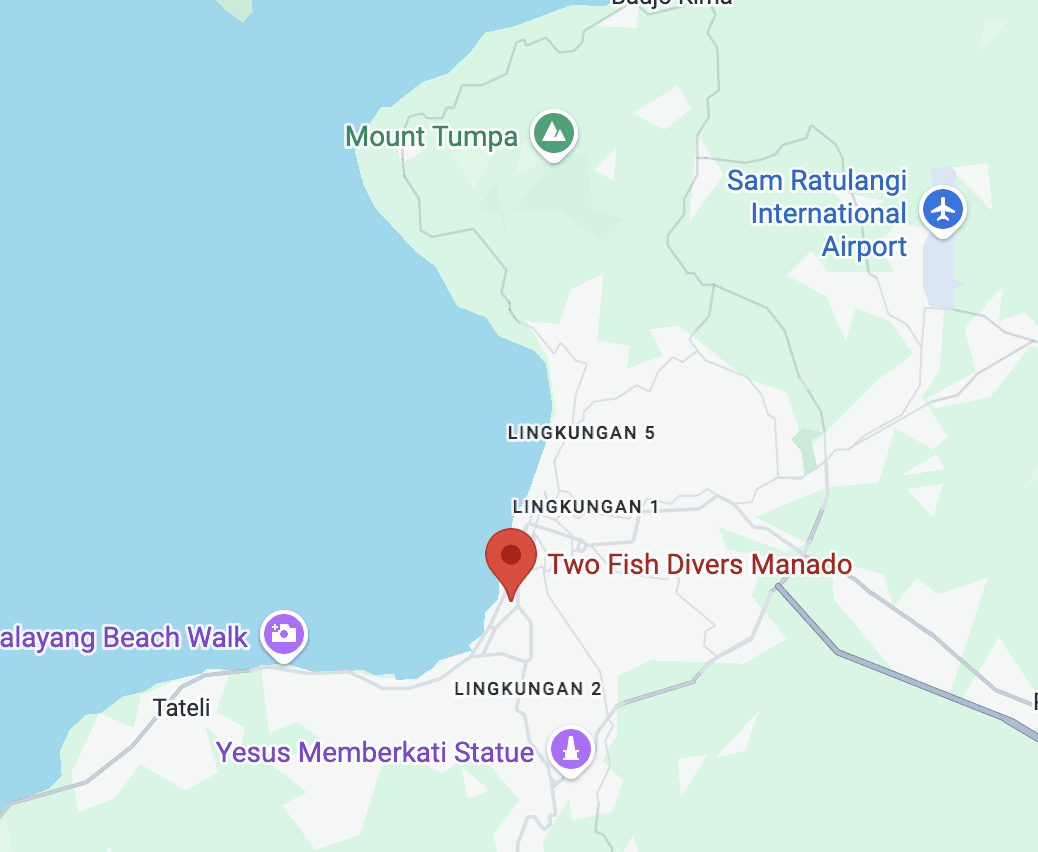
North Sulawesi diving works best when your base matches what you actually want to see. Read the site descriptions on our dive sites pages first, then pick an operator in the area that fits. Around Bunaken, Two Fish Divers Bunaken, Thalassa Dive Resort and Panorama Dive Resort all score highly with past guests. You can compare them and the rest of the region on our dive centers directory.

Where to book your North Sulawesi dive trip?




Find certified PADI, SSI, and RAID schools across Asia. Your guide to the world’s most unforgettable dive spots.