Banda Sea Diving: Hammerheads, Sea Snakes and the Ring of Fire
The Banda Sea sits in remote eastern Indonesia, reached by liveaboard from Ambon. Divers come for scalloped hammerheads, banded sea kraits and coral growing on an old lava flow. Here is when to go, what you will see and what the diving asks of you.
Indonesia
Guide
Asia

Photo by
Heidi Bruce
Banda Sea diving means long crossings, deep blue water and reefs that almost nobody else visits. This corner of eastern Indonesia sits in Maluku province, far from Bali and Komodo. Divers come for scalloped hammerheads, sea snakes on a live volcano and coral gardens growing on old lava. Trips are almost always liveaboards, and the season is short. Here is what the diving is really like, and how to plan it.
Where is the Banda Sea?
The Banda Sea is a deep basin in eastern Indonesia, inside Maluku province. It lies south of Seram, between Sulawesi, Timor and the Papua mainland. The small Banda Islands sit near its centre, reached from the port city of Ambon. The water here drops past 6,000 metres, which pulls big fish close to the reefs.
These are the original Spice Islands. For centuries the Banda Islands were the only place on earth where nutmeg grew. Banda Neira, the main island, still has its Dutch colonial fort and old plantation houses. Very few divers make it out here, so the reefs get a fraction of the traffic that Bali or the Gili Islands see.
Hammerhead sharks in the Banda Sea
Scalloped hammerheads are the headline animal in the Banda Sea. Divers look for them in open blue water off remote volcanic islands and seamounts, not on the shallow reef. Sightings are never guaranteed. When they happen, sharks usually pass below the group in loose numbers rather than in one tight school.
The best known hammerhead spots sit far from land. Manuk, a lone volcanic cone in the middle of the Banda Sea, is the site most boats aim for. Nila and Serua, two more volcanic islands on the same route, also produce sightings. All of them need a long night crossing to reach, which is why they only appear on liveaboard itineraries.
Drop into the blue, hang at your planned depth and watch the deep water below you. Patience matters more than skill here. If you want a wider look at where these sharks turn up in the country, read our guide to hammerhead shark diving in Indonesia.
The sea snakes of Gunung Api and Manuk
Banded sea kraits gather in unusual numbers at two Banda Sea sites. Gunung Api, the active volcano beside Banda Neira, has slopes where dozens of them hunt among the coral at the same time. Manuk is nicknamed Snake Island for the same reason. Both are considered signature dives of the region.
Banded sea kraits are black and white striped and highly venomous, but they are not aggressive toward divers. They spend their time poking into holes in the reef looking for small fish and eels. They also have to surface to breathe, so you often see them swimming up past you. Keep your hands to yourself, hold your position and they will ignore you.
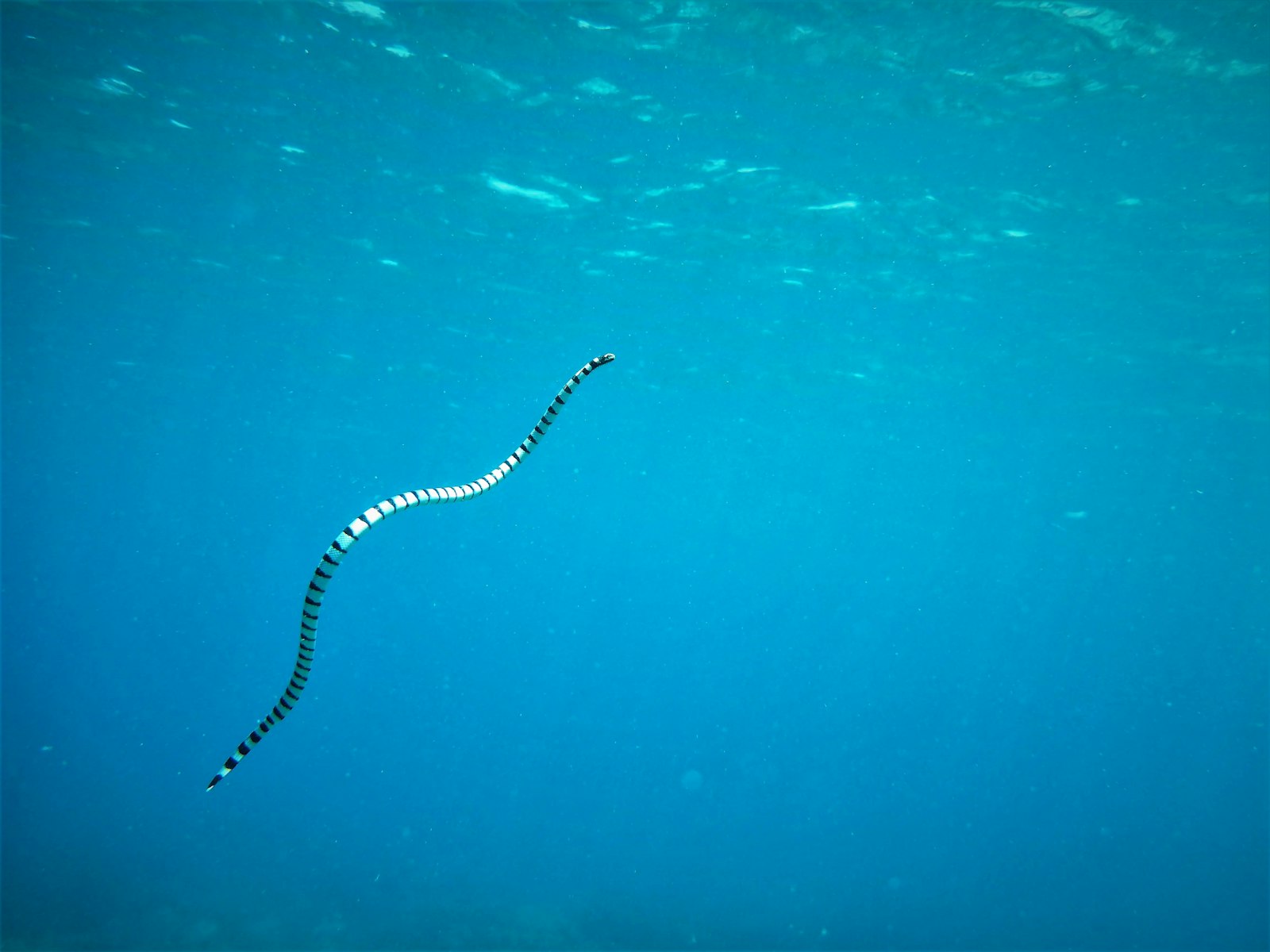
Photo by Jong Marshes
Ring of Fire dive sites worth the crossing
The Banda Sea sits on the Pacific Ring of Fire, and the volcanoes shape the diving. Gunung Api last erupted in 1988 and its lava reached the sea. The reef that grew back on that lava flow is now one of the most talked about dives in Indonesia, because dense table and staghorn coral recolonised the bare rock in a surprisingly short time.
Beyond the lava flow, the Banda Islands offer steep walls and clean hard coral. Hatta Island, on the eastern edge of the group, has a wall and shallow plateau that draw schooling fish and passing pelagics. Ai Island has similar drop-offs with big sponges and sea fans. Back at Banda Neira, the town jetty is a well known dusk dive for mandarinfish.
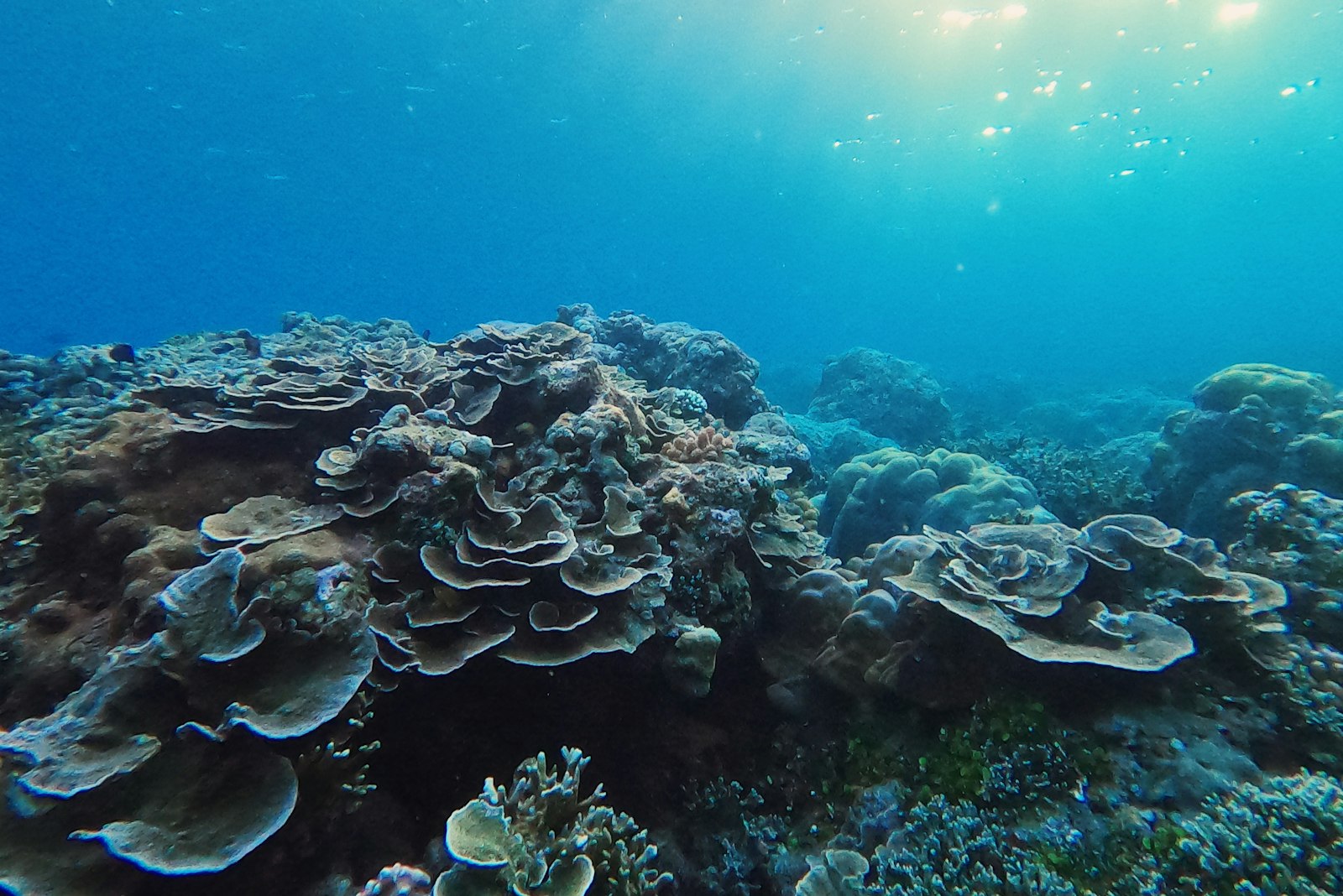
Photo by Max Kukurudziak
Visibility across the region is often 25 to 30 metres, and water sits around 27 to 29 degrees Celsius. Currents on the exposed seamounts can be strong and unpredictable. A reef hook, a surface marker buoy and a loud signalling device are standard kit on these trips.
When to dive the Banda Sea
The Banda Sea has two short liveaboard windows: roughly March to April, and September to November. These sit between the monsoons, when the crossings are calm enough for boats to run. Outside those months, almost nothing operates, and the open water is too rough for the long passages the routes require.
Because the season is narrow and the boats are few, Banda Sea trips book out early. Many divers reserve a place a year ahead. If you are still mapping out when to visit different parts of the country, our region by region guide to the best time to dive Indonesia covers the wider picture.
How to get there and what to expect on board
Almost everyone reaches the Banda Sea by liveaboard. Boats usually start or finish in Ambon, which you fly to from Jakarta or Makassar. Some routes run between Ambon and Sorong in West Papua, and some link Maumere in Flores with Ambon. Trips typically run 10 to 12 nights because of the distances involved.
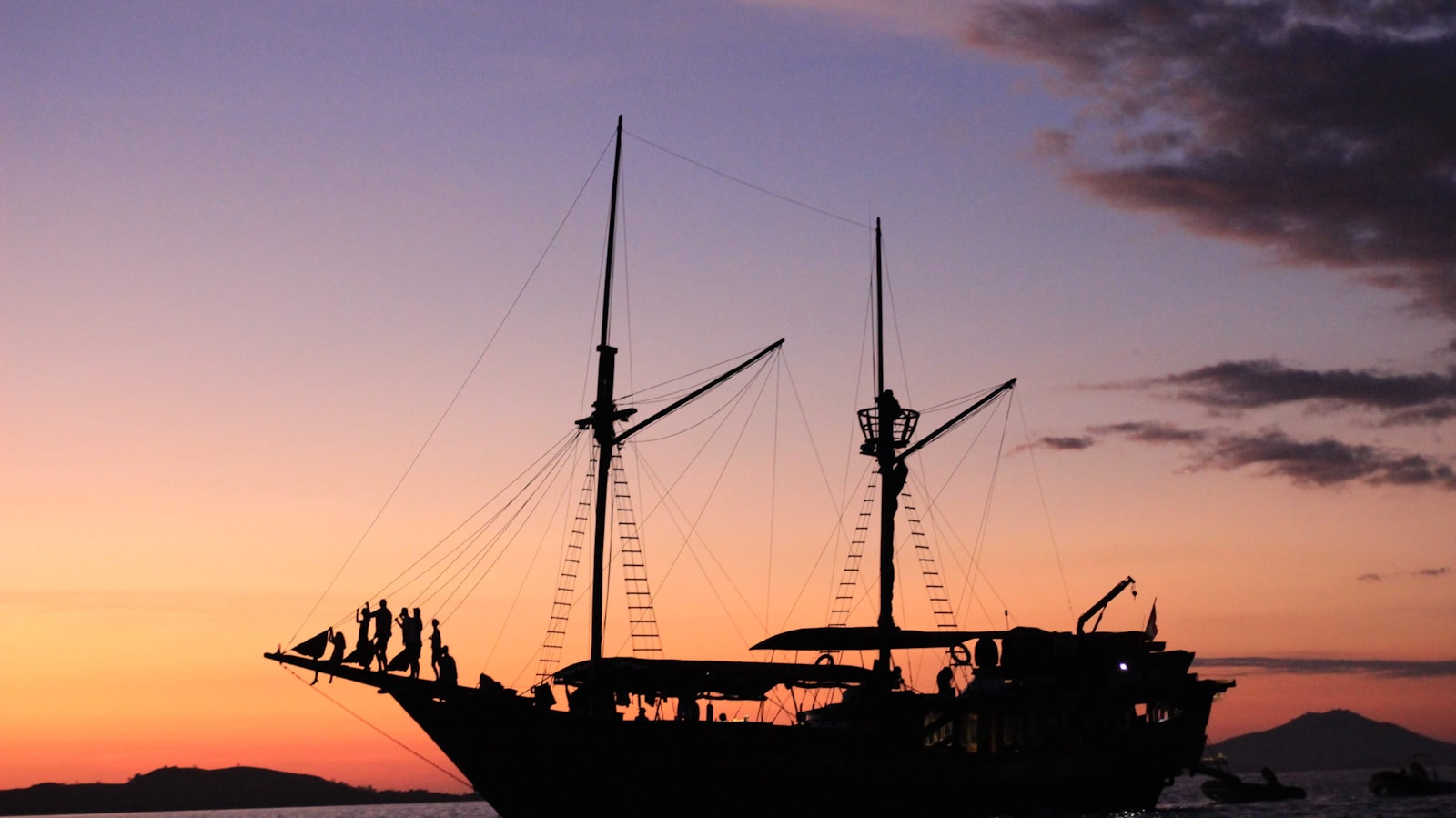
Photo by Rohim Ari
There is a small land-based option too. Banda Neira has a handful of guesthouses and a couple of dive operations, and you can reach it by Pelni ferry or a short flight from Ambon. That gets you the lava flow, the walls and the jetty dive, but not Manuk or the far seamounts.
Expect long surface intervals, blue water descents and days without seeing another boat. Many operators ask for an Advanced Open Water certificate and around 50 logged dives, because of the currents and the depth. If you are choosing between boat and resort trips elsewhere in the country, our liveaboard versus resort comparison works through the same trade-offs.
Banda Sea diving FAQs
Is Banda Sea diving suitable for beginners?
Not really. Many boats ask for an Advanced Open Water certificate and around 50 logged dives. The sites involve blue water descents, strong currents on exposed seamounts and long crossings between islands. Build experience somewhere calmer first, then come back for this one.
Are you guaranteed to see hammerheads in the Banda Sea?
No. Scalloped hammerheads are seen in open water off Manuk, Nila and Serua, but sightings are never guaranteed. Sharks usually pass below the group in loose numbers rather than one tight school. Treat them as a bonus, not the reason you booked.
Are the sea snakes dangerous to divers?
Banded sea kraits are highly venomous but not aggressive toward divers. At Gunung Api and Manuk they hunt in the coral and surface to breathe, often swimming right past you. Keep your hands to yourself and hold your position, and they will ignore you.
When is the Banda Sea liveaboard season?
Roughly March to April, and September to November. These two windows sit between the monsoons, when the long crossings are calm enough for boats to run. Very little operates outside those months, and trips in season book out early.
Can you dive the Banda Sea without a liveaboard?
Partly. Banda Neira has a few guesthouses and dive operations, reached by Pelni ferry or a short flight from Ambon. From there you can dive the Gunung Api lava flow, the island walls and the jetty. You cannot reach Manuk or the far seamounts that way.
Where to book your Banda Sea dive trip
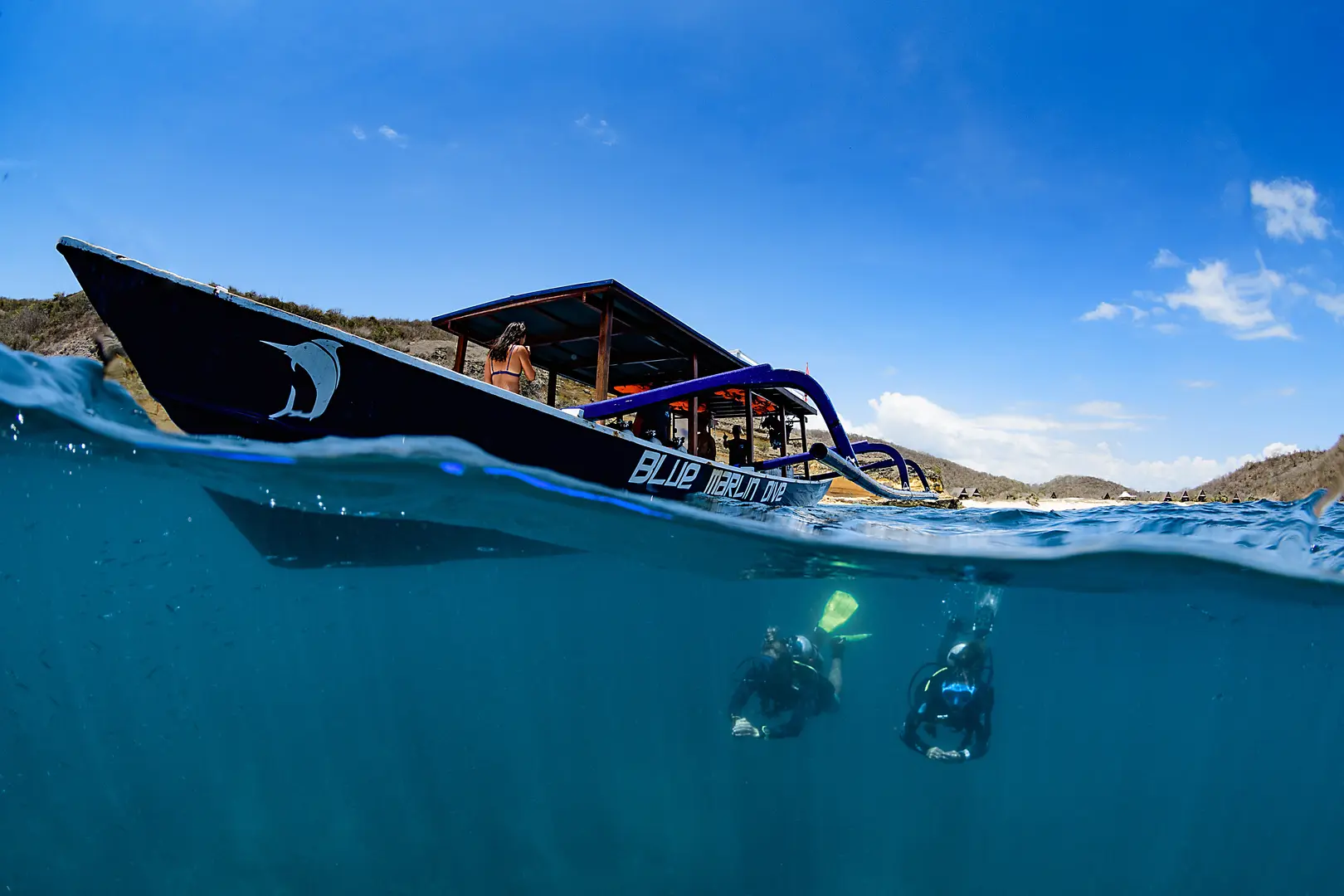
Banda Sea places sell out well before the season starts, so plan early and get your dive count up first. A good way to prepare is to log time on Indonesian reefs with an established operator. Pure Dive Resort in Nusa Penida, Adventure Scuba Diving Bali and Blue Marlin Lombok Kuta all run current-heavy dives that build the skills these crossings ask for.
Browse every verified operator in the country on our dive centres directory, or read up on individual reefs first in the dive sites directory. Both make it easier to line up the training dives before you commit to a Banda Sea boat.


Where to book your Banda Sea dive trip?

Find certified PADI, SSI, and RAID schools across Asia. Your guide to the world’s most unforgettable dive spots.