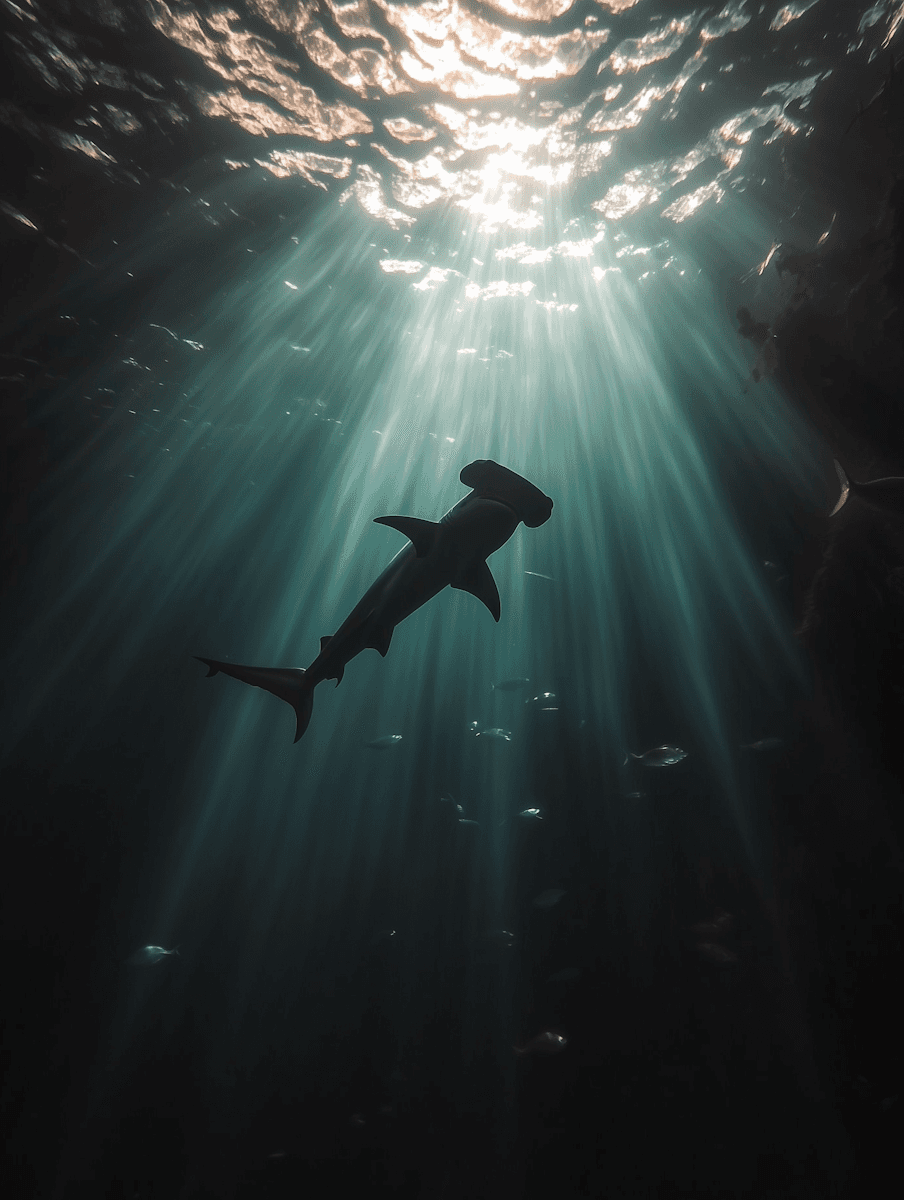
- The species you'll meet is the scalloped hammerhead.
- They usually swim at 20 to 40 m.
- Early morning gives the best chance.
- You need Advanced Open Water at least.
On this page7 sections
Hammerheads in Indonesia
A school of scalloped hammerheads passing in blue water is one of the big encounters in diving, and Indonesia has several places to see one.
This guide covers the top sites, the best seasons and the experience each one asks for.
Know your shark
The species you are most likely to encounter across Indonesia is the scalloped hammerhead (Sphyrna lewini). Named for the distinctive scalloped edge along the front of their broad, flat heads, these sharks are pelagic hunters that often gather in large schools, particularly around seamounts, reef edges, and underwater pinnacles where currents concentrate prey.
Scalloped hammerheads are listed as critically endangered on the IUCN Red List, which makes every encounter both thrilling and a reminder of why marine conservation matters. Responsible dive operators help protect them through sustainable ecotourism.
Hammerheads tend to congregate at depth, often between 20 and 40 meters, and are typically encountered in the early morning when visibility is best and the animals are most active near cleaning stations.
Top sites in Indonesia
| Site | Experience | Access |
|---|---|---|
| Banda Sea | 50+ logged dives, drift experience | Liveaboard from Ambon or Sorong |
| Alor | 50+ logged dives, drift experience | Liveaboard, or fly to Kalabahi |
| Triton Bay | 30+ dives, at ease in open water | Liveaboard via Raja Ampat or Sorong |
| Nusa Penida | Advanced Open Water | A short boat ride from Sanur |
Banda Sea: the premier destination
The Banda Sea is one of Indonesia's least-visited diving regions. This deep, nutrient-rich sea supports enormous populations of pelagic fish, and hammerheads turn up around the seamounts and walls near the Banda Islands and Ambon.
Getting there requires commitment. Liveaboard trips from Ambon or Sorong are the standard approach. Boats run in two short windows, roughly March to April and September to November, between the monsoons. Our Banda Sea diving guide covers the trip in detail. Experienced divers who make the trip find hammerheads, big tuna and dramatic underwater topography.
Alor: currents and pelagics
Alor sits at the eastern end of the Lesser Sunda Islands and channels strong currents through its straits, creating ideal conditions for pelagic species. Hammerheads are regularly sighted along its deeper walls and channels. This is drift diving, so you need to be comfortable in moving water.
Alor is accessible by liveaboard or by flying into Kalabahi from Kupang or Bali. The best diving season runs from April through November.
Triton Bay: remote and rewarding
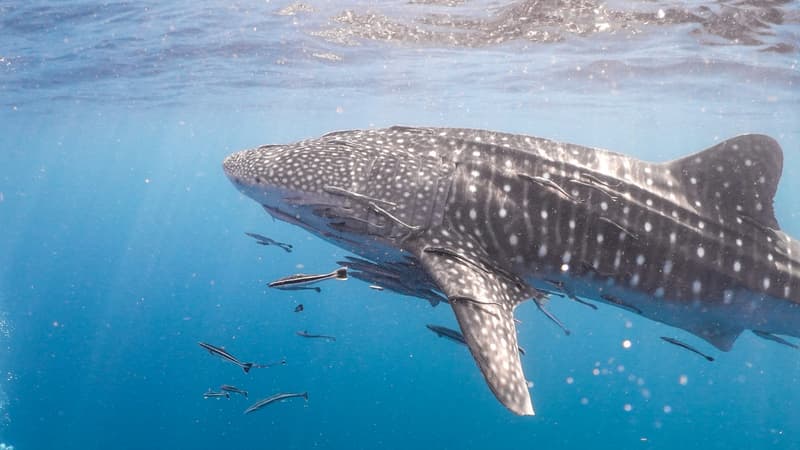
Triton Bay in West Papua is best known for whale sharks and soft coral, but hammerheads are seen here too. The bay’s nutrient-rich waters attract a wide range of pelagic visitors, and a dedicated early-morning dive at the right seamount can put you in the middle of a hammerhead school.
Access is by liveaboard only, typically routed through Raja Ampat or Sorong.
Nusa Penida: accessible from Bali
Nusa Penida is famous for mola mola and manta rays, but the deeper sites around the island, particularly Crystal Bay and Toyapakeh, also produce hammerhead sightings. Conditions here can be challenging: strong thermoclines, surge, and unpredictable currents are common. The upside is that Nusa Penida is a short boat ride from Sanur, making it the most accessible hammerhead dive in Indonesia.
The best season for big pelagic encounters at Nusa Penida is July through October, when cold upwellings push deeper water to the surface.
What certification do you need?
Most hammerhead shark dive sites in Indonesia require at least Advanced Open Water certification, and several demand a meaningful amount of logged dives. Here is a realistic breakdown.
The Banda Sea and Alor are best approached with 50 or more logged dives and solid drift diving experience. Triton Bay suits divers with 30 or more dives who are comfortable in open water. Nusa Penida is accessible for Advanced Open Water divers, but the unpredictable conditions mean experience matters.
It allows more bottom time at depth without pushing your no-decompression limits as quickly. If you have not done your nitrox course yet, consider completing it before your trip.
Tips for a better encounter
Dive early. Hammerheads are most active and most visible in the first dive of the day. Get in the water at first light whenever the conditions allow.
Stay calm and control your buoyancy. Hammerheads are skittish compared to reef sharks. Erratic movement, rapid ascents, or excessive bubbles will push them away. Slow, controlled movement and solid buoyancy will give you longer and closer encounters.
Let the current work for you. Most hammerhead sites in Indonesia involve drift diving. Position yourself so you can hold your depth without finning hard, and you will have far more energy to focus on what is in front of you.
Dive with experienced local guides. A divemaster who knows where hammerheads typically appear and how to approach them is worth more than any tip sheet.
Hammerhead diving FAQ
Where is the best place to see hammerheads in Indonesia?
The Banda Sea, around the seamounts and walls near the Banda Islands and Ambon. Alor, Triton Bay and Nusa Penida also have sightings, and Nusa Penida is the easiest to reach.
When is hammerhead season in Indonesia?
It depends on the site. Banda Sea boats run roughly March to April and September to November, Alor's season is April to November, and Nusa Penida's big pelagics come with the cold upwellings from July to October.
What certification do you need to dive with hammerheads?
Advanced Open Water at least. The Banda Sea and Alor are best with 50 or more logged dives and drift experience, Triton Bay with 30 or more. Nitrox helps at all of them.
What time of day are hammerheads easiest to see?
Early morning. They are most active near cleaning stations on the first dive of the day, usually between 20 and 40 meters.
Plan your hammerhead trip
Pick the site that fits your experience, time the trip for its season and book with operators who know the animals. Nusa Penida is the easiest to reach, a short boat ride from Bali. The Banda Sea, Alor and Triton Bay take a liveaboard or a long journey.
Starting from Bali? Compare dive shops on Nusa Penida.