Misool Diving Guide: Raja Ampat's Southern Jewel
Misool sits at the far southern tip of Raja Ampat, protected by one of Indonesia's oldest no-take marine reserves. Expect walls thick with soft coral, oceanic mantas at cleaning stations, and some of the richest muck and macro life in the Coral Triangle.
Indonesia
Guide
Asia

Photo by
Simon Spring
Misool diving takes you to the far southern tip of Raja Ampat, in Indonesia's West Papua province. This remote cluster of limestone islands holds around 50 known dive sites, a private marine reserve older than most Indonesian dive laws, and reef fish biomass that has more than tripled since surveys began. Few places in the Coral Triangle pack in this much life.
A Marine Reserve That Rebuilt Itself
In 2005, local communities partnered with the Misool Resort and the Raja Ampat Marine Park Authority to close two zones to all fishing. It was a direct response to shark finning and reef bombing that were wiping out fish stocks in the area. Today the reserve covers 1,220 square kilometres, split between two no-take zones and a restricted-gear corridor that links them, all leased directly from the villages that once fished there.
The results are hard to argue with. Between 2007 and 2021, fish biomass grew by an average of 248%, and some sites saw increases of 600% in just the first six years. Shark numbers are up 190% since 2012. Oceanic manta sightings rose 25-fold between 2010 and 2016. An 18-person ranger team runs patrols from three stations and five boats, watching the reserve around the clock.
Best Misool Dive Sites
Misool's dive sites sit close together, so a single day can move from swim-throughs to manta cleaning stations to macro walls.
Boo Windows is the most photographed site in the area. Two narrow rock windows let sunbeams cut through the water, framing fusiliers, batfish, and passing Napoleon wrasse. Turtles and pygmy seahorses hide in the surrounding reef.
Magic Mountain is where most divers come for mantas. A submerged reef rises to about 5 metres and holds two cleaning stations, drawing both reef and oceanic mantas on the same dive. Whitetip and grey reef sharks patrol the slopes below.
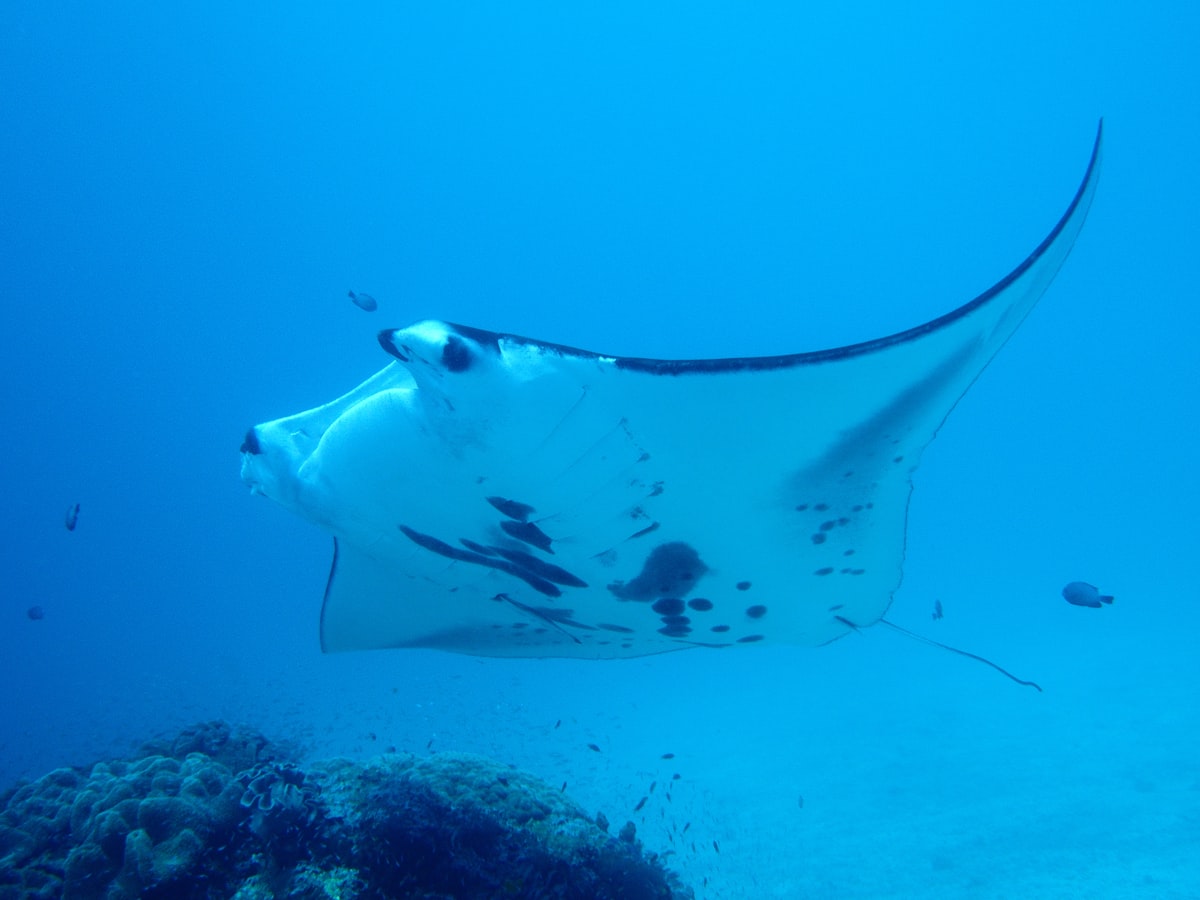
Photo by Swanson Chan
Nudi Rock, part of the Fiabacet chain, gets its name from its shape when seen from above. Underwater it is a macro hunting ground: around a dozen pygmy seahorse species have been recorded on its walls, alongside nudibranchs in almost every color.
Two more sites worth planning around: Whale Rock draws schooling barracuda and jacks over a current-swept pinnacle, best saved for divers comfortable in moving water. Yilliet Kecil is calmer and shallower, known for tasselled wobbegong sharks resting flat under table corals, an easy site for underwater photography.

Photo by Pascal van de Vendel
Reef Life Beyond the Sites
Schooling fish are a Misool constant. Sweetlips, fusiliers, and batfish stack up in walls thick enough to block the light, and the reserve's biomass numbers show in the density of it. Turtles are common on almost every dive, and the reef itself, built on decades of protection, is some of the healthiest hard and soft coral cover left in Raja Ampat.
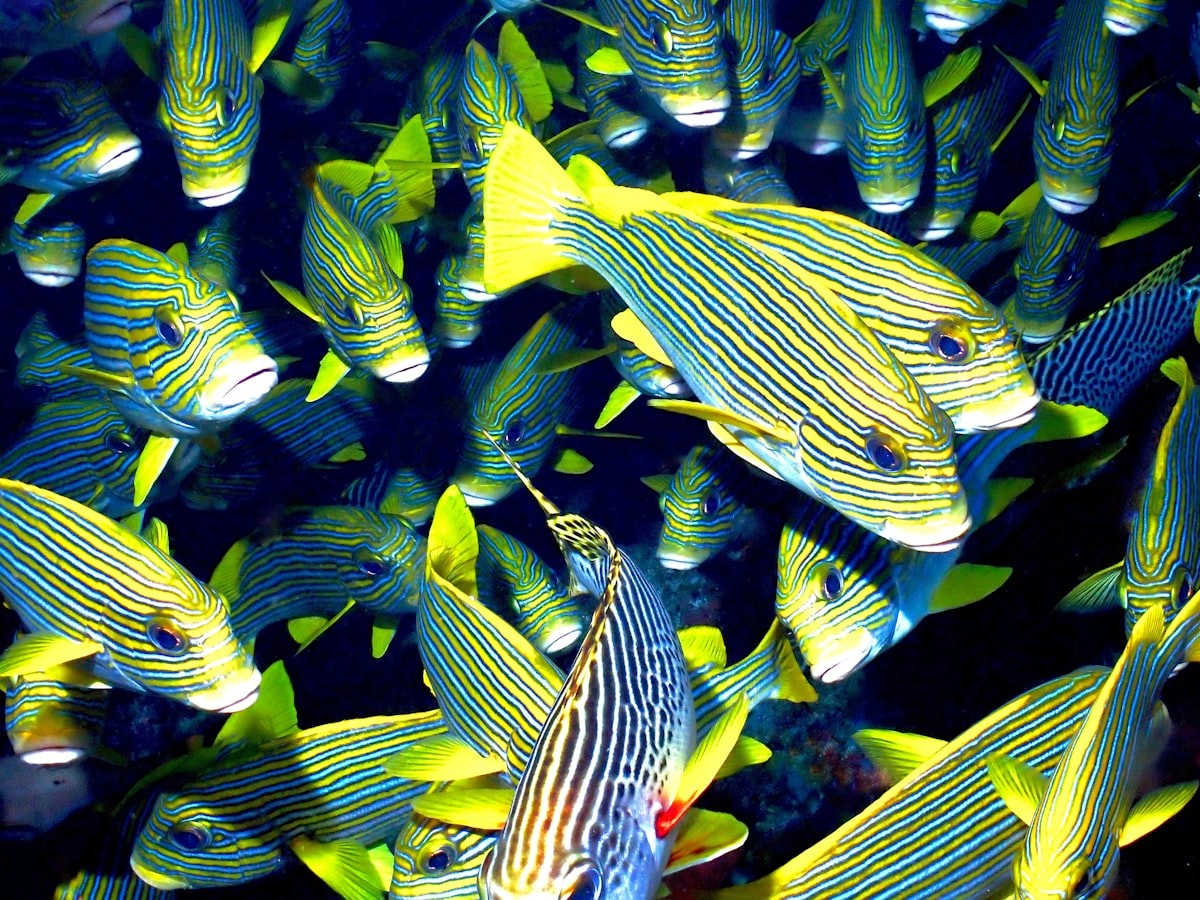
Photo by Claus Giering
Dive Conditions in Misool
Visibility in Misool usually runs 15 to 25 metres, and can go higher outside plankton blooms. Those same blooms are often what pulls mantas in to feed, so a slightly hazier day can mean a better manta dive. Water stays warm year-round, around 27 to 30°C, so most divers get by with a 3mm wetsuit. Depths at the main sites range from 5 to 30 metres, with some walls dropping further for those who want it.
Currents vary by site. Sheltered reefs like Boo Windows suit divers of any level, while exposed sites such as Magic Mountain can pull hard enough that an Advanced Open Water certification, or real drift-diving experience, makes the dive easier. Most operators brief currents carefully before every dive, since conditions can shift with the tide.
A Reserve Funded by Diving
The Misool Marine Reserve is a private initiative, not a government park, so tourism pays much of its running cost. Diver and guest fees from Misool Resort and its partner boats help fund the rangers, patrol boats, and community lease payments that keep the no-take zones enforced. Booking with an operator that supports the reserve is a direct way to help keep the recovery going.
When to Dive Misool
Misool diving runs on a tight calendar. The open season is October to April, when the seas stay calm enough for boats to cross from Sorong. From roughly June to mid-September, the southeast monsoon brings rough, often dangerous crossings, and almost no operators run trips during that window.
Late April is a good time if macro life is the priority. Water temperatures peak near 31°C, soft corals open their polyps, and juvenile critters like ghost pipefish and pygmy seahorses get easier to spot.
Getting to Misool
There is no airport in Misool. Flights land in Sorong, West Papua, with connections from Jakarta, Bali, Makassar, or Manado. From Sorong, resort guests take a private speedboat transfer that runs about 4 to 5 hours depending on sea conditions. Liveaboards run multi-day itineraries out of Sorong instead, often combining Misool with Dampier Strait or the Fam Islands further north.
Because of the distance and the short season, most Misool trips need booking months ahead, especially for the October to April window.
Misool Diving FAQ
How many dive sites does Misool have?
Around 50 known dive sites, packed into a compact area at the far southern end of Raja Ampat.
When is Misool open for diving?
The season runs October to April. Rough seas close most crossings from Sorong between June and mid-September.
Can you see manta rays in Misool?
Yes. Magic Mountain has two cleaning stations that draw both reef and oceanic mantas, and oceanic manta sightings across the reserve rose 25-fold between 2010 and 2016.
How do you get to Misool?
Fly into Sorong, then take a speedboat transfer of about 4 to 5 hours, or join a liveaboard that departs from Sorong.
Is Misool good for underwater photography?
Yes, especially macro. Nudi Rock alone has around a dozen recorded pygmy seahorse species, and late April brings peak soft-coral color.
Where to Book Your Raja Ampat Dive Trip
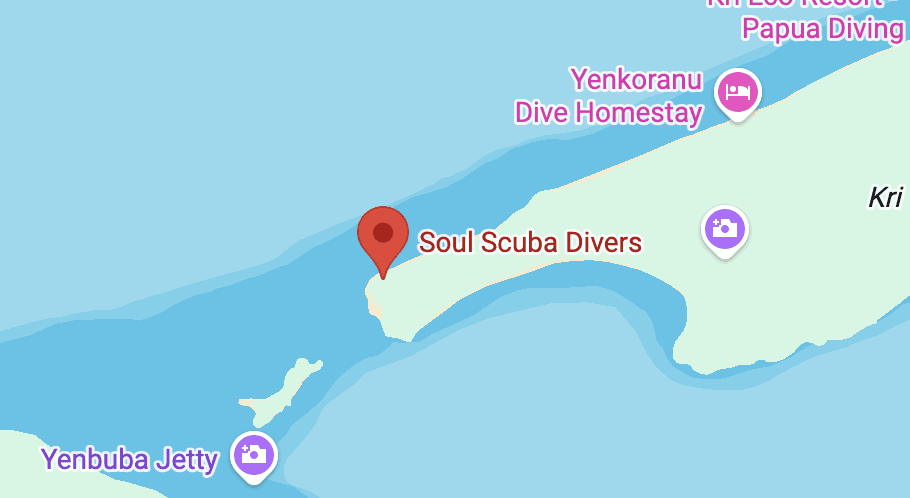
Misool sits at the far southern end of Raja Ampat, so most trips start with an operator based in the wider region before heading south. Soul Scuba Divers, Papua Explorers Dive Resort, and Meridian Adventure Dive all run trips out of Raja Ampat and can help plan a Misool itinerary. Browse more operators on our dive centers directory, or check other Raja Ampat dive sites before you book.
New to the region? Read our Raja Ampat diving guide for the basics, our guide to manta ray diving in Southeast Asia for more cleaning-station tips, or our Komodo liveaboard guide if you're comparing liveaboard regions.


Where to book your Raja Ampat dive trip?




Find certified PADI, SSI, and RAID schools across Asia. Your guide to the world’s most unforgettable dive spots.