Dampier Strait Diving: Raja Ampat's Best Dive Sites
The Dampier Strait is the heart of Raja Ampat diving. Strong currents feed reefs that hold world record fish life, from Cape Kri to Manta Sandy. Here are the best dive sites, the conditions and the best months to go.
Indonesia
Guide
Asia

Photo by
Oleksandr Sushko
Dampier Strait diving is the reason most divers come to Raja Ampat. This stretch of water sits in the middle of the archipelago, and it holds the reefs that made the region famous. Strong tidal currents push nutrients through the strait every day. The result is thick coral cover, big schools of fish, and dive sites that stay busy with life all year round.
This guide covers the best Dampier Strait dive sites, the conditions to expect, the best months to go, and how to reach the strait from Sorong. If you are still choosing a region, start with our Raja Ampat diving guide.
What Is the Dampier Strait?
The Dampier Strait is the channel that separates the islands of Waigeo and Batanta in Raja Ampat, West Papua. It takes its name from William Dampier, the British navigator who first sailed through it in 1700. The islands of Kri, Mansuar and Gam sit inside the strait, and most of Raja Ampat's best known dive sites lie along their shores.
The strait matters because of what flows through it. The Indonesian Throughflow, a major current carrying water from the Pacific toward the Indian Ocean, first meets land here. Narrow gaps between the islands squeeze that flow, so currents speed up. They carry plankton onto the reefs. Small fish feed on the plankton, and bigger fish follow the small fish. The dense marine life in the Dampier Strait is a direct result.

Photo by Claus Giering
The Best Dampier Strait Dive Sites
The best Dampier Strait dive sites are Cape Kri, Blue Magic, Sardine Reef, Mike's Point, Mioskon and Manta Sandy. Most sit within a short boat ride of Kri and Mansuar. They range from shallow, calm jetty dives to fast drift dives on exposed points, so the strait suits a wide mix of experience levels.
Cape Kri
Cape Kri is the most famous dive site in Raja Ampat. In 2012 the marine biologist Gerald Allen counted 374 fish species here on a single dive, which stands as a world record. The site runs along the north east point of Kri Island. Current sweeps over a sloping reef and a drop off, and big schools of trevally, barracuda and snapper hold in the flow.
Blue Magic
Blue Magic is a submerged seamount between Mioskon and Cape Kri. The top of the reef sits at about 8 metres and the structure drops to around 30 metres. Current can run strong here, and that is the draw. Reef manta rays, reef sharks and thick schools of pelagic fish all use the site. Most operators treat Blue Magic as an advanced dive.
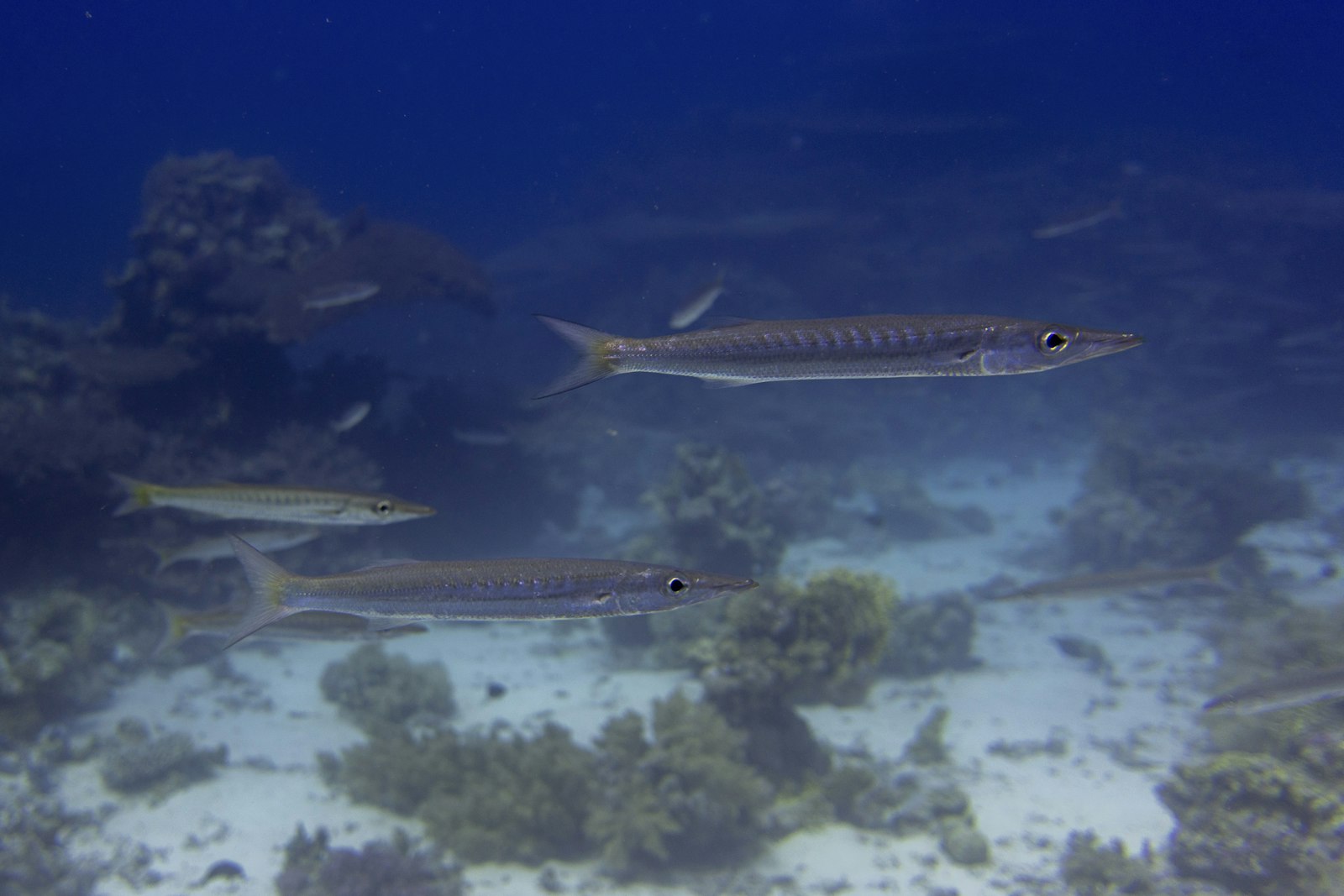
Photo by Oliver Schwaneberg
Sardine Reef
Sardine Reef is an underwater hill east of Kri Island. Soft corals, black coral bushes and large gorgonian fans cover the structure. The name comes from the fish. Sardines, fusiliers, butterflyfish and bannerfish stack up in the current to feed on what it brings. It is one of the busiest sites in the strait when the flow is running.
Mike's Point
Mike's Point sits at the eastern tip of Kerupiar Island. It holds some of the strongest current in Raja Ampat. Rock has broken away from the island over time, leaving crevices and overhangs behind. Those cracks make good ground for macro life. Dive this one with a guide who knows how the tide behaves.
Mioskon
Mioskon is the calm option in the strait. Current is usually light, which makes it an easy dive and a good second or third tank of the day. Wobbegong sharks rest under the coral ledges here, and a large school of striped snapper works the slope. Coral cover is healthy and the fish life is close in.
Sauwandarek and Yenbuba Jetty
These two shallow sites are the gentlest diving in the Dampier Strait. Sauwandarek has green turtles and schooling jacks in the shallows, over terrain that is easy to read. Yenbuba Jetty works as a day dive and as a night dive, with turtles and big fish schools around the pilings. Both sites suit newer divers and snorkellers.
Manta Sandy
Manta Sandy is a reef manta cleaning station on a patch of sand. Depth runs from about 5 metres down to 20 metres, so it is open to beginners and snorkellers as well as experienced divers. Divers wait behind a low line of stones and let the mantas come in. On a good day up to 20 mantas pass through.
Currents and Dive Conditions
Water in the Dampier Strait stays between 27 and 30 degrees Celsius all year. Visibility usually runs 20 to 30 metres in the dry season, and it can drop to 10 to 15 metres in the wet months. Current is the real variable. It can run hard on the exposed points and sit almost still inside the bays.
You do not need a technical background to dive here, but you do need to be comfortable in moving water. Negative entries, reef hooks and surface marker buoys are normal kit on the current sites. An Advanced Open Water certification and some recent dives help. Tell your guide about your experience honestly. They will match you to the right site and the right tide.
When to Dive the Dampier Strait
October to April is the best time to dive the Dampier Strait. Rain is lighter, winds are milder, seas are calmer and visibility is at its best. Manta activity at the cleaning stations peaks between December and April. Water stays warm right through the year, so the season is about surface conditions rather than temperature.
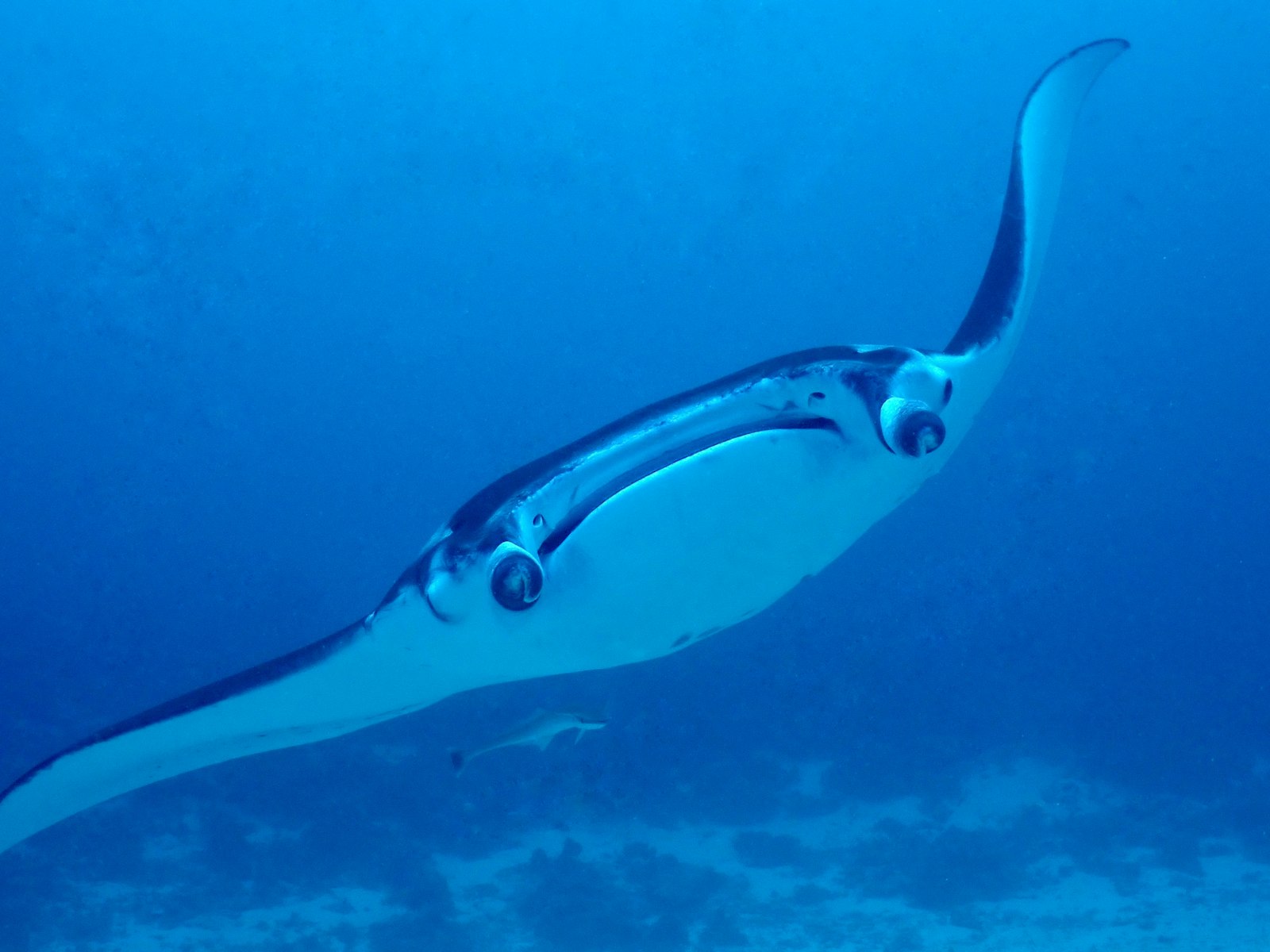
Photo by Claus Giering
May to September is the wet and windy stretch. Southern winds can build big waves, and the Dampier Strait is exposed to them. Many liveaboards stop running in July and August. Land based operators on Kri and Mansuar still dive through this period when conditions allow. Our Indonesia season guide compares the regions month by month.
How to Get to the Dampier Strait
Getting to the Dampier Strait starts with a flight to Sorong in West Papua, usually through Jakarta or Bali. From Sorong harbour a ferry runs to Waisai, the capital of Raja Ampat, in about two to two and a half hours. Ferries leave in the morning and in the afternoon. Resorts and homestays collect divers from Waisai by boat.
Every visitor needs a marine park permit and a visitor entry ticket, and both are bought on arrival. Our Raja Ampat guide covers the permit process. For a base you can pick a homestay on Kri or Mansuar, a dive resort, or a liveaboard. Liveaboards reach sites further out, including the southern reefs of Misool.
Dampier Strait Diving FAQ
Where is the Dampier Strait?
The Dampier Strait is the channel between Waigeo and Batanta in Raja Ampat, West Papua. The islands of Kri, Mansuar and Gam sit inside it. Waisai, the capital of Raja Ampat, is the main gateway town.
What is the best dive site in the Dampier Strait?
Cape Kri is the best known. Gerald Allen counted 374 fish species there on one dive in 2012, a world record. Blue Magic and Sardine Reef are the other two sites divers rate most highly.
Is Dampier Strait diving good for beginners?
Parts of it are. Manta Sandy, Sauwandarek and Yenbuba Jetty are shallow and gentle enough for new divers. Blue Magic and Mike's Point have strong current and are treated as advanced dives.
When can you see manta rays in the Dampier Strait?
Reef mantas visit the cleaning station at Manta Sandy through the year, and activity peaks between December and April. Blue Magic also gets manta sightings when the current is running.
Do you need certification for the Dampier Strait?
Open Water certification covers the shallow sites. For the current sites an Advanced Open Water certification and recent dives are strongly recommended, since negative entries and reef hooks are standard there.
Where to Book Your Dampier Strait Dive Trip
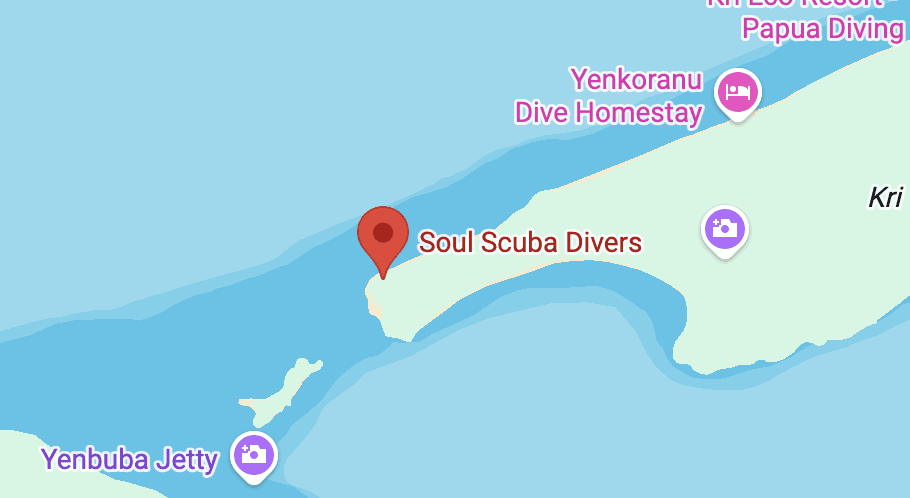
Ready to dive the Dampier Strait? Several operators run the strait's sites daily. Soul Scuba Divers is based on Kri Island itself, Papua Explorers Dive Resort sits on Gam Island in the middle of the strait, and Meridian Adventure Dive runs from Waisai. Compare more operators in the Scubalo dive center directory, and read up on individual reefs in our dive site guides before you book.


Where to book your Raja Ampat dive trip?




Find certified PADI, SSI, and RAID schools across Asia. Your guide to the world’s most unforgettable dive spots.