Diving the USAT Liberty Wreck: Tulamben's Easy Shore Dive
The USAT Liberty is Bali's most famous wreck dive. This WWII cargo ship sank just metres from a black-sand beach in Tulamben. Decades of coral growth have turned its hull into a thriving reef, home to jackfish, pygmy seahorses, and nudibranchs. Because you dive it straight from shore, it's one of the easiest wreck dives anywhere in the world.
Indonesia
Guide
Asia

Photo by
Nathanaël Desmeules
The USAT Liberty wreck in Tulamben is Bali's most famous dive site. It's also one of the easiest wreck dives in the world to reach. This World War II cargo ship was torpedoed off Lombok and now rests just metres from a black-sand beach in northeast Bali. Coral covers the wreck, and schools of jackfish swim around it. There's no boat trip needed, just a short walk from the car park into the water. Divers of every level can dive here, from new Open Water divers to experienced wreck divers. For such an easy dive, it gives you a huge amount to see.
What Is the USAT Liberty and How Did It End Up in Tulamben?
The USAT Liberty is a World War II US Army cargo ship. It lies wrecked just off Tulamben's black-sand beach in northeast Bali, broken apart in shallow water and covered in coral. A Japanese submarine torpedoed the ship in the Lombok Strait in January 1942, while it was carrying rubber and railway parts. The ship began taking on water, so the crew tried to tow it to Singaraja, on Bali's north coast, for repairs. It never made it that far. Instead, the crew beached the ship at Tulamben, saved the cargo, and left it sitting on the sand.
The wreck sat on the beach, mostly untouched, for more than two decades. That changed in 1963, when Mount Agung erupted. This volcano towers over the coast near Tulamben. Earthquakes from the eruption shook the Liberty off the beach and into the sea. It settled a short swim from where it had been beached, and it's still there today.
More than six decades later, the Liberty is one of the most-dived shipwrecks in the world. It's not the biggest or best-preserved wreck out there. What makes it special is how easy it is to reach: almost nowhere else can you walk off a beach and be swimming through a WWII wreck within minutes.
Diving the Wreck: Layout and Depths
You enter from Tulamben's pebble beach, then swim a short way out to the wreck, which lies parallel to the shore. The Liberty is now broken into several sections. Decades of coral growth have softened its edges, so it no longer looks like a sharp, intact ship. Depths range from as shallow as 3–5 metres near the top, shallow enough for snorkelers to see from the surface, down to about 30 metres at the deepest point near the stern.
This range of depths is part of what makes the Liberty so popular. New divers can explore the shallow sections safely, while more experienced divers can go deeper into the hull and through its swim-throughs. The wreck has sat still for decades now, so it acts more like a reef than a ship. Sponges, soft corals, and anemones now cover its steel plating and old machinery.
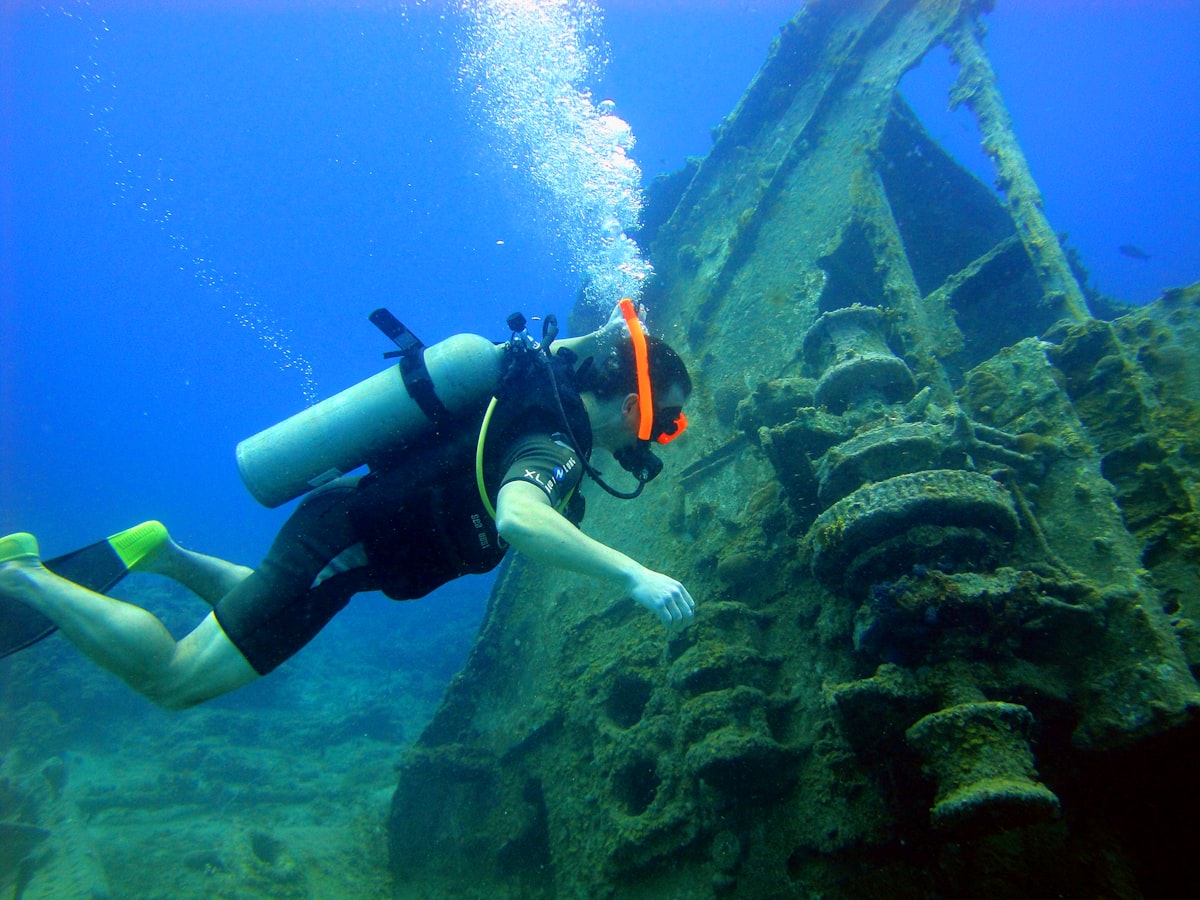
Photo by Karl Callwood
Conditions change through the day. Mornings tend to be calmer, with less current and better visibility. Afternoon winds can stir up the shallow water near the beach entry.
Marine Life on the Liberty Wreck
The wreck attracts a lot of marine life. Large schools of jackfish and batfish circle the hull, often so thick they block out the sunlight above. Bumphead parrotfish visit often too, feeding on the coral that's grown across the old steel.
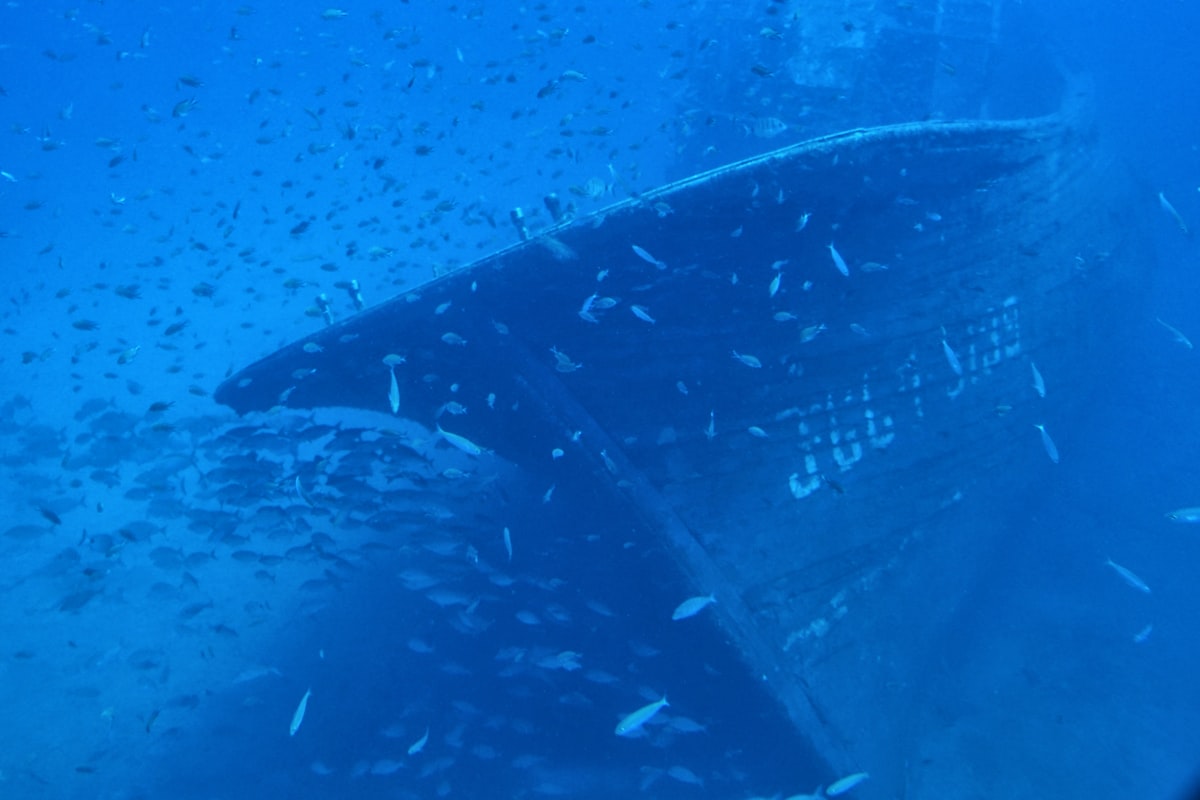
Photo by Markus Kammermann
Look closer and you'll find smaller creatures too. Ghost pipefish hide among the soft corals, pygmy seahorses cling to nearby sea fans, and nudibranchs cover the wreck's surface. Tulamben is famous among underwater photographers for its many nudibranch species. Cuttlefish and scorpionfish also rest on the wreck, blending in well with the coral. Divers who move slowly along the hull, instead of swimming straight through, tend to spot the most. This dive site rewards patience over speed.
Best Time to Dive Tulamben
Bali's dry season, roughly April through November, has the calmest conditions and best visibility for diving the Liberty. The sea is usually flatter, which makes the shore entry easier too. Still, you can dive the wreck all year round, since it sits close to shore and is sheltered compared to more exposed dive sites on the island. Morning dives usually have the calmest water, before afternoon winds pick up and stir the shallows near the beach.
Getting to Tulamben
Tulamben sits on Bali's northeast coast, about a two to three hour drive from the south of the island, near Denpasar, Kuta, and Sanur. The road follows the coast past Amed and runs beneath the slopes of Mount Agung. Most divers either stay in Tulamben for a few days of repeat dives, or visit as a day trip from elsewhere on the island. Since you dive straight from shore, there's no boat schedule to plan around. Dive centers in the area run trips to the wreck several times a day.
The village of Tulamben has grown up around the wreck. Dive shops, guesthouses, and small warungs line the coast road. If you stay in Tulamben, the Liberty is just a short walk away. This makes it easy to fit in an early morning dive, or a second and third dive to explore different parts of the wreck at a slower pace.
Tips for Diving the USAT Liberty
A few things make a Liberty dive easier. The beach entry is pebbles, not sand, so reef booties and slow, careful steps help you avoid a stumble at the water's edge. Local porters at the beach will often carry your tanks and gear down to the water for a small tip. It's worth using them, especially after a day of multiple dives. Good buoyancy control matters more here than on an open reef. The coral on the wreck is fragile, and touching it or kicking up silt ruins the visibility for other divers.

Photo by Ekaterina Zlotnikova
If you want to explore the deeper hull sections or swim through parts of the wreck, get wreck or advanced training first. Some parts of the structure are broken and easy to get lost in. Because the site is popular, an early morning dive also means calmer water, fewer other divers, and better light for photos.
USAT Liberty Wreck FAQs
How deep is the USAT Liberty wreck?
The wreck lies at depths from about 3–5 metres near the top down to about 30 metres at the stern. This makes it a good dive for both new divers and experienced wreck divers.
Do you need a boat to dive the USAT Liberty?
No. The Liberty is a shore dive. You walk in from Tulamben's pebble beach and swim a short way out to reach it.
What certification do you need to dive the Liberty?
Open Water divers can explore the shallow sections with no trouble. For the deeper hull sections or swim-throughs, it's best to have wreck or advanced training.
When is the best time to dive Tulamben?
Bali's dry season, roughly April through November, has the calmest seas and best visibility. You can still dive the Liberty all year, though, since it's sheltered close to shore.
Where to Book Your Tulamben Dive Trip
Ready to dive the Liberty? Browse Scubalo's full list of Bali dive sites and dive centers to plan your trip. Or go straight to three well-reviewed operators that run trips to Tulamben: Adventure Scuba Diving Bali, Bali Scuba, and Blue Season Bali. To find the best time to visit, see our guide to the best time to dive Indonesia. And for more great spots nearby, check our roundup of the best dive sites in Bali.


Where to book your Bali dive trip?

Find certified PADI, SSI, and RAID schools across Asia. Your guide to the world’s most unforgettable dive spots.